
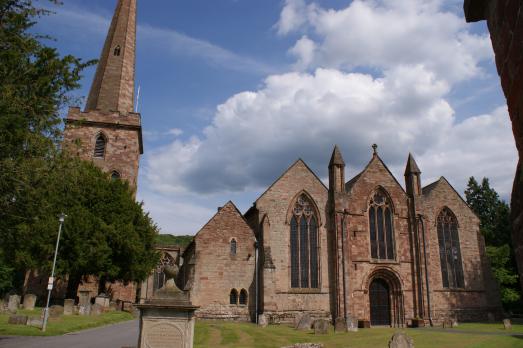
St Michael & All Angels
Ledbury, Herefordshire | HR8 1PL
From Norman times onwards St Michael's was Herefordshire's biggest and most important church.
Search for a fascinating place to visit, or see the variety of churches, chapels and meeting houses we have supported.
Ledbury, Herefordshire | HR8 1PL
From Norman times onwards St Michael's was Herefordshire's biggest and most important church.
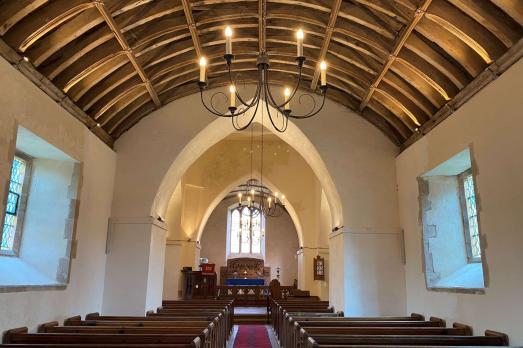
Llanfihangel y Creuddyn, Ceredigion | SY23 4LA
13th century Welsh Romanesque church of cruciform plan with a central tower.
We have supported this church
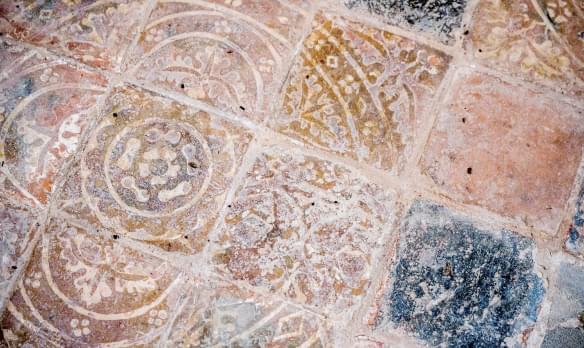
East Wellow, Hampshire | SO51 5DR
Flint walls, a low, steeply pitched roof and a 15th century wooden porch give the outside of St Margaret's a quiet rural charm.
We have supported this church
Romsey, Hampshire | SO51 8EN
Founded in 907, the abbey was at first a nunnery then, from 974, a Benedictine Abbey of nuns.
We have supported this church
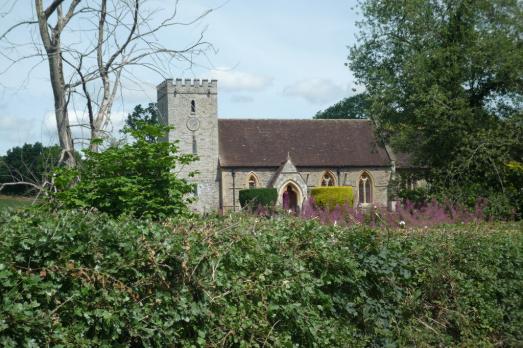
Titley, Herefordshire | HR5 3RR
Set amidst stunning scenery, St Peter's is a high Victorian jewel of a church, richly decorated, its monuments and fittings bring alive the fascinating history of the building and its people.
We have supported this church
East Grafton, Wiltshire | SN8 3DB
Like Oare, the church is built in neo Romanesque style, this time by Ferrey in 1844.
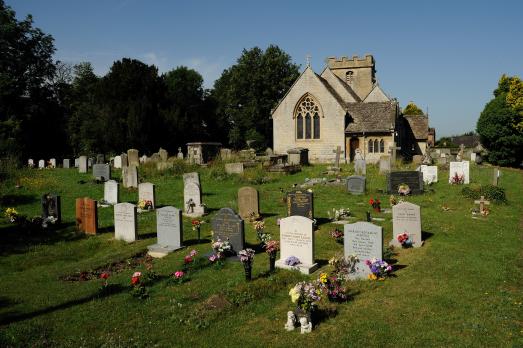
Down Hatherley, Gloucestershire | GL2 9QB
This beautiful Cotswold stone church, rebuilt in 1859–60 with a 15th-century tower, features stunning stained glass and has links to the American Declaration of Independence.
We have supported this church

Cricklade, Wiltshire | SN6 6AX
St Sampson, with its magnificent tower, is an outstanding architectural and artistic landmark close to the Thames Path.
We have supported this church
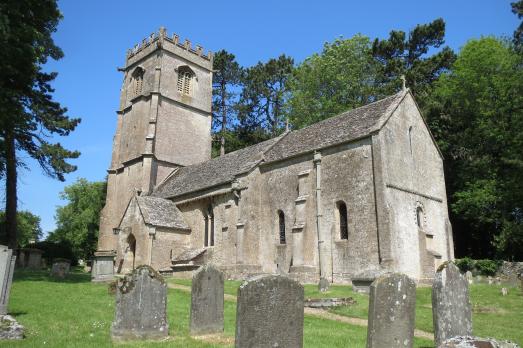
Elkstone, Gloucestershire | GL53 9PD
The sturdy 14th century Perpendicular west tower of St John's marks the highest church in the Cotswolds.
Nursling, Hampshire | SO16 0YB
This is a small rural church with a great history and wonderful peaceful atmosphere.
Swindon, Wiltshire | SN1 3HB
Christ Church is a grade II* listed church, built in 1851 to a design by George Gilbert Scott.

Eling Hill, Hampshire | SO40 9HF
The tenth oldest church in England overlooks the waters of the Solent and Test Estuary from its wild churchyard.