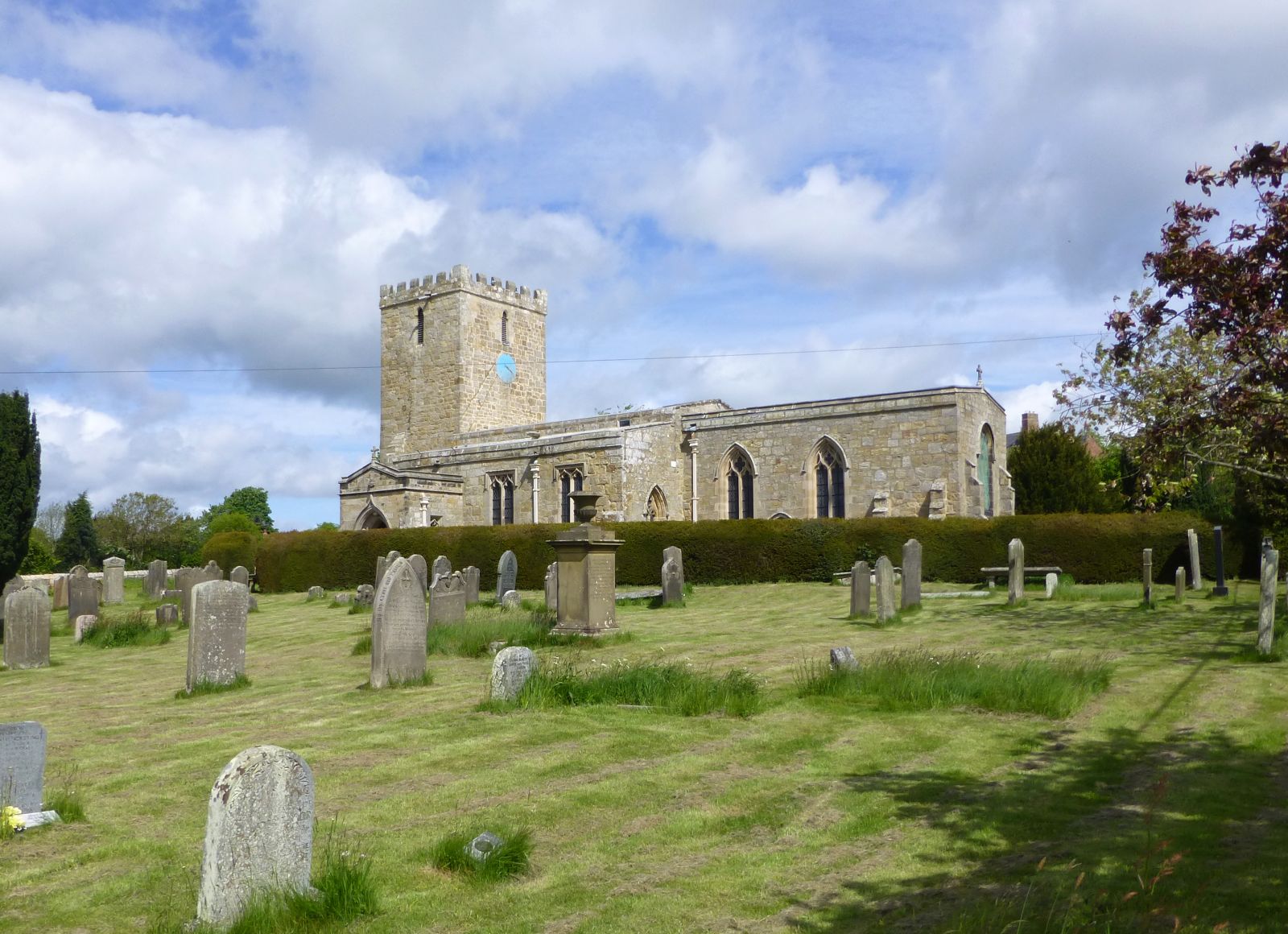
A beautiful 12th century church with a peaceful atmosphere in an idyllic rural village. The Ogle family chapel is on the left of the chantry. To commemorate the year 2000, the Whalton Christ, a montage of 2850 pieces of photographs taken in 2000 was created. Each villager took 12 photos of what Whalton meant to them. These were collected and made into an image of Christ. Largely medieval church displaying the evolution of a well developed 13th century church from a Norman core. Interesting carvings in stonework and a turret clock dated 1796.
A beautiful medieval parish church designated as a Grade I heritage asset with a peaceful atmosphere in an idyllic rural village, displaying the evolution of a well-developed 13th century church from a Norman core. Interesting carvings in stonework and a single hand turret clock dated 1796. The Ogle family chapel exists to the north of the chancel.
Within the church there are several items of furniture and fittings that are worthy of note. An octagonal 15th century font to the nave west end; medieval glass within the tracery to the south aisle east window; traces of medieval script and illustrations to the walling masonry above the nave arcades; the Whalton Christ photographic collage in the north aisle (created by the village community); within the Ogle Chapel there are three floor slabs of 1564, 1566 and 1613, among the earliest armorial stones in the country; painted benefaction slab of 1720 in the north aisle; royal arms of George II in the south aisle; wall monuments in the ogle chapel include John Ogle d1831 and Sara Ogle d1846, both by E.W. Baily; carved Canon Walker Memorial reredos of 1901; carved choirstalls and marble tiled sanctuary.
The church stands a little north-of-centre in a rectangular churchyard. There is a generous scattering of headstones, predominantly to the south of C18 and early 19th century date. The road running to the east of the church is sunk below the level of both churchyard and was spanned, a few metres northeast of the churchyard gate, by a wooden swing bridge, probably of early 19th century date. The wooden bridge no longer exists but stone steps at the west and pier on the east still exist. This led to the Rectory, now a private home, and it was clear when the Priest was in church as the bridge was down to enable access!
Several of the headstones and tombs are classified as a designated heritage asset, therefore meriting significance and protected by heritage legislation, all formally listed and scheduled as follows: Rochester tomb (three metres south of chancel), Robson headstone (eight metres southwest of porch), Davison tomb (four metres south of porch) and Renwick headstone (eleven metres south of church).