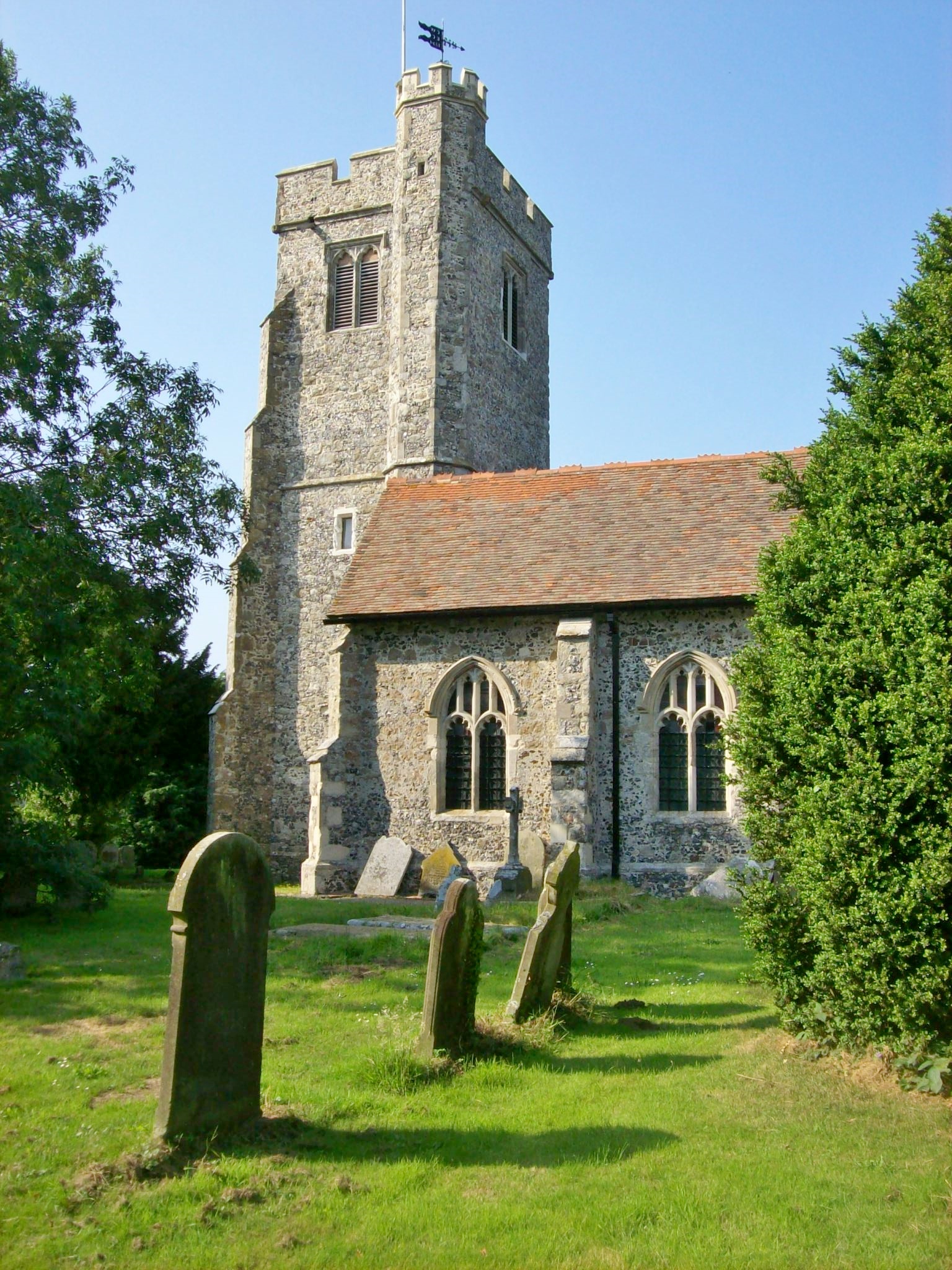
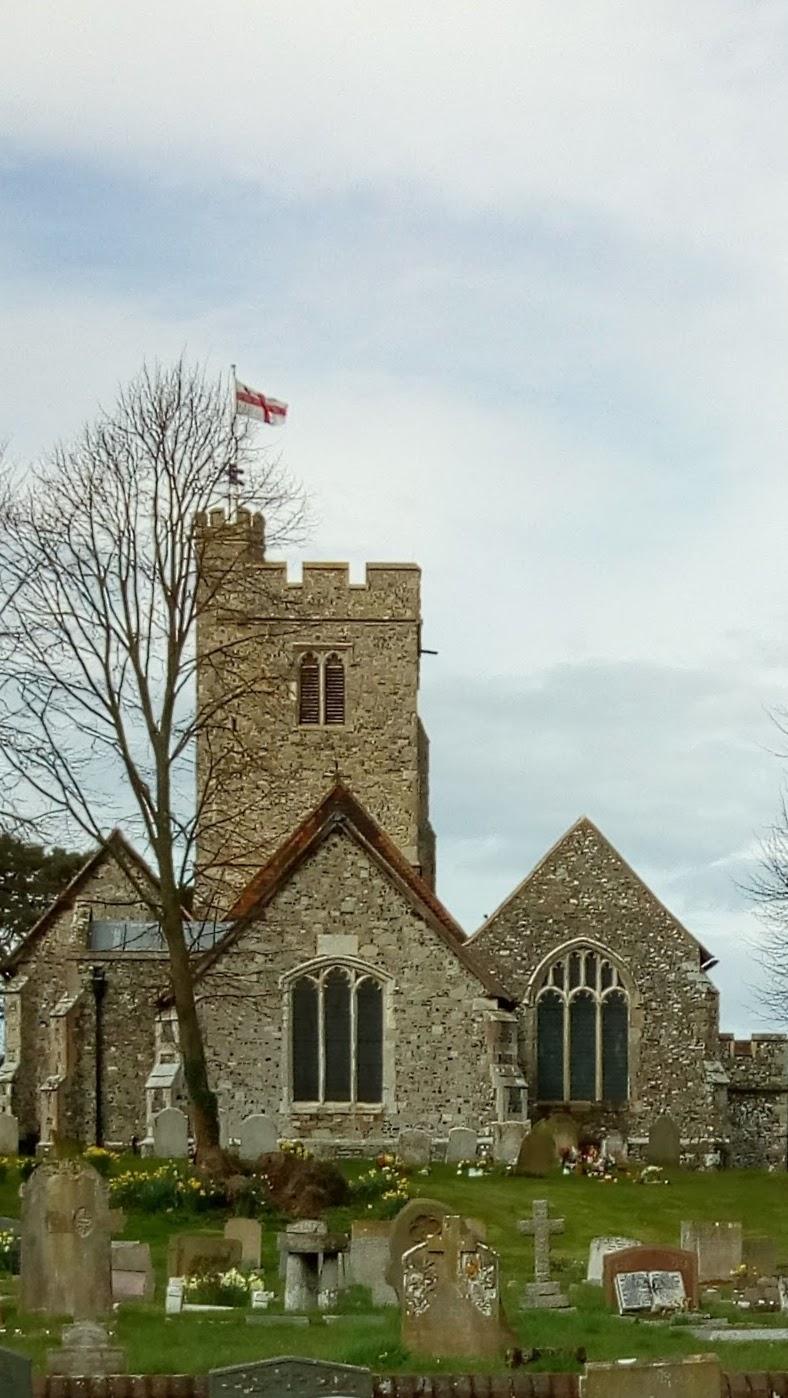
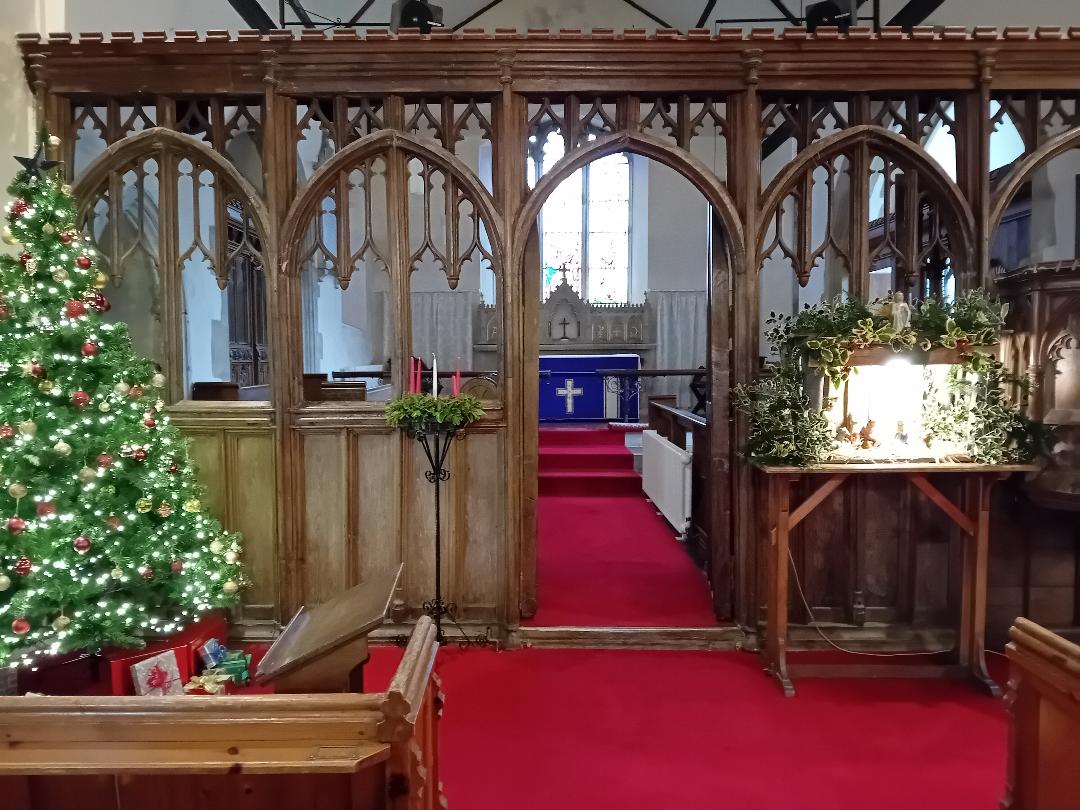
Most of the current building is 15th century, built in the distinctively English perpendicular style with graceful, slender columns and four centred arches of Bethersden Marble separating the nave from the aisles. The church is one of the few in Kent which is still wholly in the perpendicular style. Parts of the earlier church remain in the south aisle where marks left by the 12th century masons are etched into the wall. The Martyn family, local lord of the manor, was responsible for the 15th century building. To celebrate the completion, they installed a memorial window, fragments of which can still be seen in the south window of the chancel. This 15th century glass survived because it was hidden from Cromwell in a local barn. It was probably first installed during the reign of Edward IV as it contains the image of the sun in splendour, his heraldic badge, and the white roses of York.
The top lights in the south aisle windows show scenes from the Old and New Testaments. They are believed to be late Georgian and possible painted by amateur artists. The lower painted panels tell the story of Joseph and were painted in 1836 by Cassandra Handley, the wife of Reverend Charles Handley who was vicar of Hernhill from 1815 to 1866.
The east window in the lady chapel is by the famous Pre-Raphaelite artist Henry Holiday and is unique for the 19th century as it features women from the Acts of the Apostles- Eunice, Lois, Priscilla and Dorcas.
The Victorians played an important part in creating the church we see today with their major restructuring and reordering in the 1870’s, when the box pews were removed; the Jacobean pulpit and tester, and the musicians’ gallery at the west end of the church.
Buried in unmarked graves in the churchyard are eight of the casualties of the Battle of Bossenden Wood on 31st May 1838, the last battle on English soil.