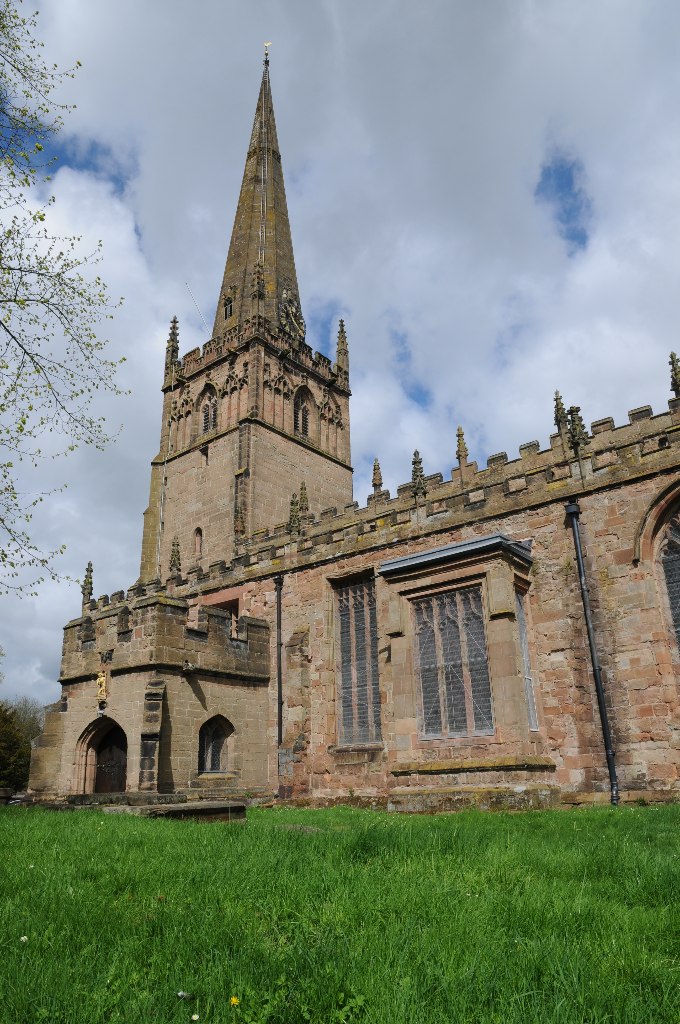
St John the Baptist is a sizable, medieval building which dates from the 12th century, but is predominantly of 14th and 15th century construction. It was extensively restored in 1858 by George Gilbert Scott.
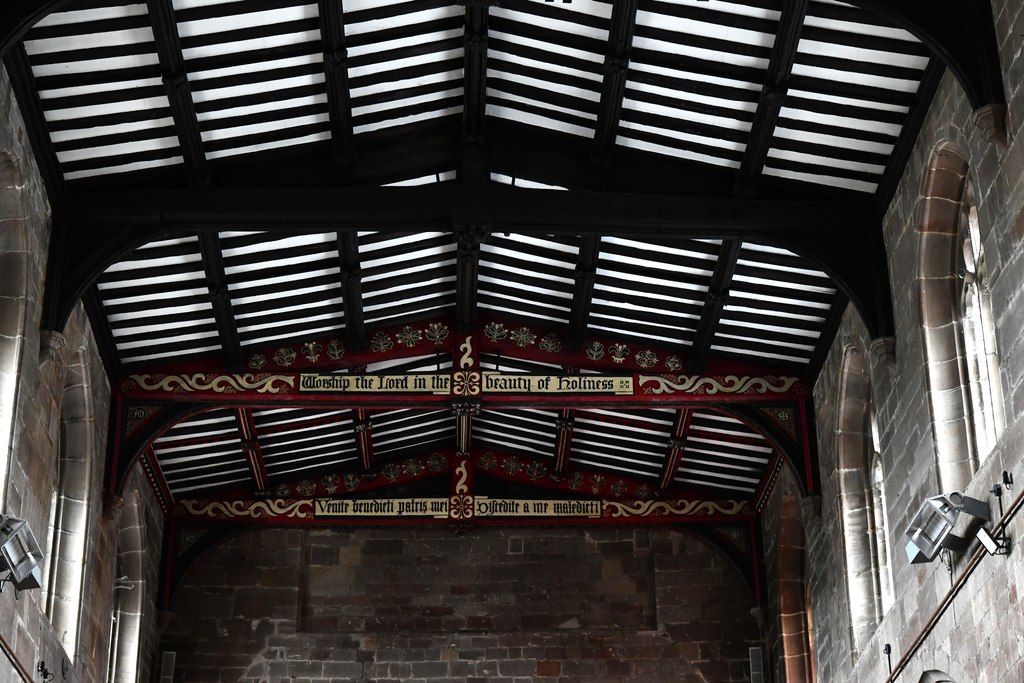
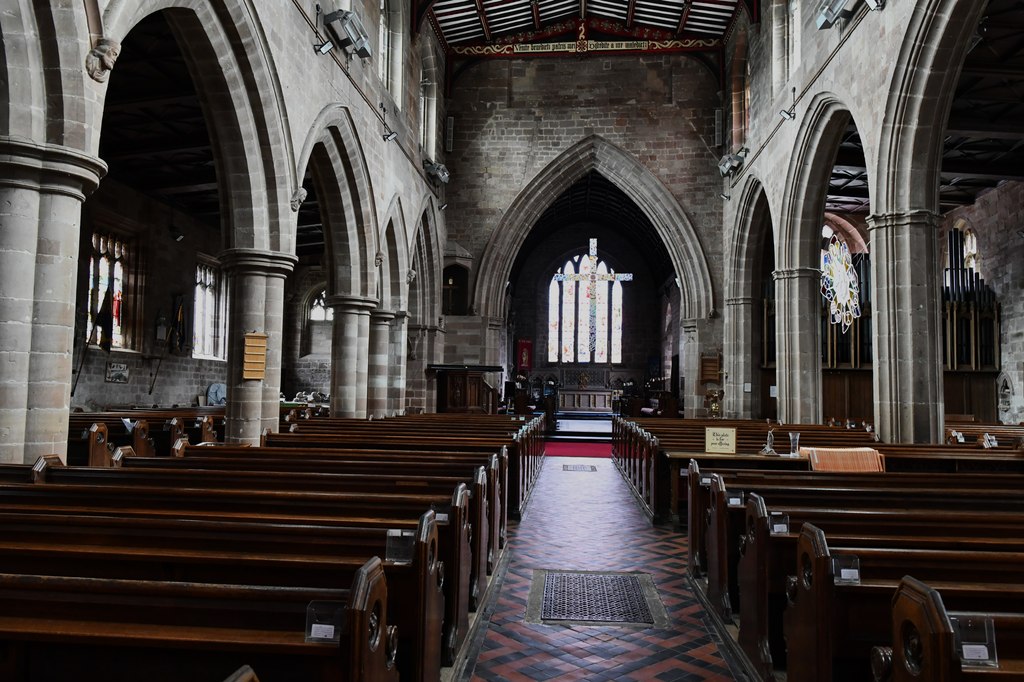
The church has a large nave with high timber beamed ceiling and aisle to the north and south which together create a square footprint. Victorian pews cover the floor with central aisle and crossing. There are many examples of the work of The Bromsgrove Guild of Craftsmen. There is a full peel of church bells and records show they were first added in 1690s. The first mention of a clock is from 1684.
Inside the church is a large, cast metal memorial to the men of Bromsgrove who were killed in the First World War. Among the names listed is Captain Noel Chavasse, VC & Bar, MC (1884–1917), the medical doctor and Olympic athlete from the Chavasse family. He is one of only three people to be awarded a Victoria Cross twice.
13th century and early 16th century alabaster monuments can be found in the north chapel and an alabaster effigy of 1517 in the chancel. These monuments depict notable local people. Sir Humphrey Stafford and his wife Eleanor. Gilbert Talbot (soldier) and his first wife, Lady Elizabeth Talbot (née Greystoke, died 1490). John Talbot (died 1549) and his wives Margaret (née Troutbeck) and Elizabeth (née Wrottesley) - buried side by side. Ralph Greystoke, 5th Baron Greystoke
There are records of an organ in the church dating from 1808 when a small instrument was installed by Thomas Elliot. The opening recital was given by Bishop Simms. There have been subsequent rebuildings and renovations over the years, resulting in a 3-manual and pedal pipe organ, largely by the Malvern firm of Nicholson. A specification of the organ can be found on the National Pipe Organ Register.
The graves of engine driver Scaife and fireman Rutherford in the churchyard who both lost their lives when the boiler of a locomotive exploded in Bromsgrove station on 10 November 1840.