
More than half of churches in the UK distribute food to people in need. They provide an essential service and make a meaningful difference to people’s lives. But often, the need is great. And getting a project off the ground can take careful coordinating and a lot of work. Inverness Foodstuff – hosted at Ness Bank Church – has grown substantially since launching more than a decade ago. The project has provided tens of thousands of meals in that time and is changing lives in the city. So how has it achieved and sustained this success and managed to offer so much support to its local community?
Origins
The seeds of Inverness Foodstuff were sown in 2014, when local churches – including Ness Bank Church – and other organisations came together to tackle hunger among people who are homeless and other vulnerable groups.
“The genesis of the thing was simply volunteers making pots of soup, opening the doors and feeding people as they came in,” explains Stuart Smith, Minister at Ness Bank Church.
“But it was obvious that the needs were greater than simply providing a bowl of soup for people once in a while. And once you’ve got a space that people come to, the opportunity is there to provide all kinds of additional support."
With this in mind, the decision was taken to set up a new, independent charity. Inverness Foodstuff was born, and a team of staff and volunteers created.
Partnering with other organisations
Access to good food is transformative. It can be the catalyst that turns someone’s life around, and Inverness Foodstuff has developed further support to address the broader needs of its users.
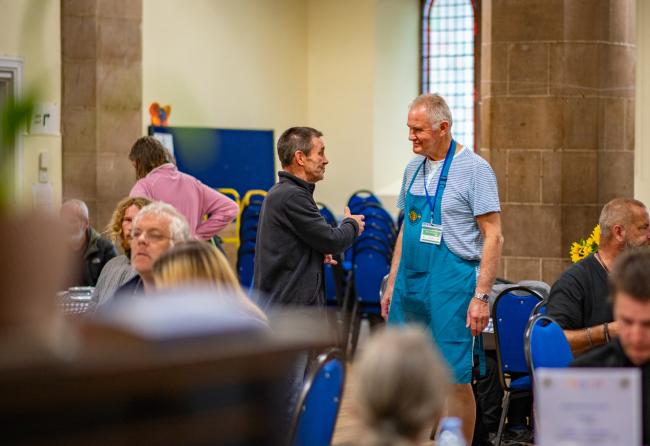
Ness Bank’s church hall now hosts a range of Inverness Foodstuff’s activities, all designed to support vulnerable people into more stable livelihoods. At the heart of this success is a spirit of collaboration between the church leadership, the congregation, Inverness Foodstuff and other local organisations.
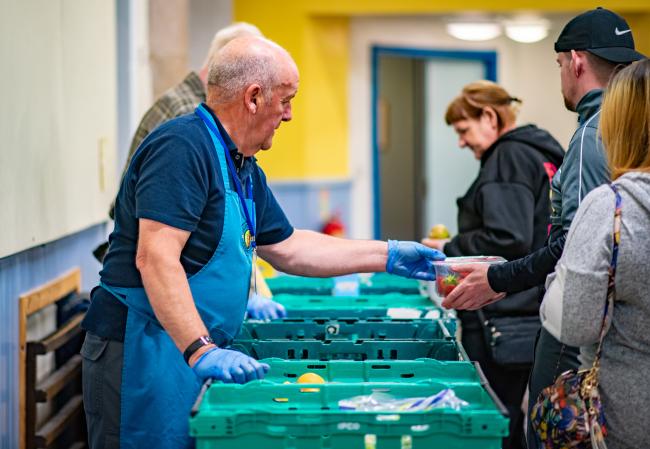
“As well as providing the food, which is a three-course lunch three times a week plus breakfasts over the winter, there's also a tie up with the homeless medical service for the city. So, there's two nurses and a doctor who are in at different times providing medical appointments,” explains Stuart.
“Citizens Advice come to the church, so they can help people to access the grants they're entitled to. There's a digital inclusion charity called Red Share because obviously a lot of the services or appointments that people need to make are accessed online and if you don't have access then that's very difficult. There's New Start Highland, which provides furniture and equipment for people moving into new homes.
“Some of the neighbouring businesses have also been very positive and helpful. For example, we've got a large hotel right next door to us, the Glenmore Hotel, and every Christmas they provide lunch for 100 people.”
Inverness Foodstuff has benefitted from creating a sense of community around the project, which has led to strong relationships with these organisations. They know they cannot provide everything themselves, and so by reaching out to other support organisations, they have been able to deliver even more support for local people.
A perfect match
While much of this support is run by separate charities, the church still provides significant practical support, and many of the project’s volunteers are from the congregation at Ness Bank. It’s a strong partnership.
“Inverness Foodstuff pays the church to use the space. It’s a level below what we’d charge commercially for other users – say orchestras that need a rehearsal space, for example. But it means that it pays its own way. It helps to cover our utilities, like heating and lighting, and maintenance,” shares Stuart.
“It’s not something that’s set up to generate income. It works more like a partnership where Inverness Foodstuff helps to cover some of our [the church’s] costs.”
The mutual benefits of this set up are clear. Inverness Foodstuff has a place to host its services, while the church has a modest but sustained revenue stream that means it can stay on top of bills.
“A spin-off benefit has been that just through our close association with that, it gives us a credibility with organisations and individuals in the city who know what we do. It gives people a more positive image of our church,” says Stuart.
The approach at Ness Bank Church can be applied in different scenarios, even if your foodbank, community larder or pantry doesn’t operate through a partnership. The key principle is being realistic about the costs and budgeting for them. As Ness Bank Church shows, this can create financial sustainability over a long period of time.
Volunteers are vital
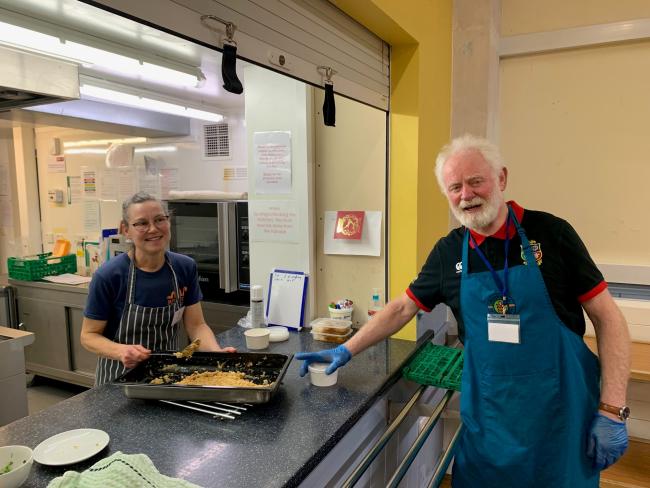
Although Inverness Foodstuff has two and a half full-time staff now, volunteers remain a vital part of delivering the service. There are dozens of people involved, from a wide range of backgrounds.
“Some of them come from businesses that give people volunteering time off, some are younger people who volunteer as part of their Duke of Edinburgh Award. Most are older – retired or nearing retirement and seeing this as an opportunity where they can use their skills in different ways to give back,” says Stuart.
“Some people will just give one day a week or one day a month. Some of them are in the kitchen chopping onions and are quite happy in there. Others are out front of house, treating guests as they come in and interacting with them directly. And others are behind the scenes.
“One of the strengths we have is volunteers with a whole range of skills and a whole range of time availability.”
Managing all of that might sound like a big challenge, but Inverness Foodstuff is embracing technology to help. You can use apps to manage rotas, enabling volunteers to give time flexibly.
By harnessing the strengths of volunteers and enabling them to be flexible with their time commitment, the project has developed a strong, reliable team to deliver services consistently.
Keep learning and listening
One of the biggest reasons that Inverness Foodstuff has developed so much since it began is that the team has continued learning every step of the way. Conversations with the guests help volunteers to better understand their needs. But the team has also implemented a formal feedback process.
“We do an annual satisfaction survey, if you like, where users are able to say how they find the experience, how they find the food, how they find the welcome and so on,” shares Stuart.
This anonymous survey enables users to be more honest with their feedback, enabling genuinely useful changes to be made. In turn, Inverness Foodstuff provides additional support services, both with its volunteers and by engaging specialist organisations.
Listening to feedback from users and from your volunteers – and thinking about where improvements can be made – enables projects to continue to be effective at supporting the needs of local people while retaining your skilled and hardworking volunteers.
Safeguarding
“An ongoing issue that we have is with the atmosphere around the church, making sure that people feel safe,” explains Stuart.
“Some of the people coming to use the service are suffering from addiction or mental health problems. And some of them will have been involved with things in the past, like drug trafficking and criminal activity. It means that kind of stuff is coming to the church door.
“We’re pleased that they’re coming to receive support. But we do have to be really careful. For example, if there’s a children’s activity going on, there is a duty of care.
“Similarly, we’re in a touristy area and we want to encourage visitors to come into the church. But passing tourists might not see the church as a place for a cultural experience.
“So, one of the things we're trying to manage going forward is how we can adapt the building a bit to cater to all of these different groups. It’s not about creating an upstairs-downstairs situation, because they can work together. For example, visitors could have the option to pay a couple of extra pounds for their latte, to contribute towards feeding people.”
Recognising the different groups of people using your church and their needs, while also ensuring everyone feels safe and welcome in your church building is important and should be reviewed on a regular basis.
Ness Bank Church has become a hub of vital support for people in need. A layering of services, tackling hunger, digital exclusion, and many more issues affecting homeless people, have been built up over time thanks to a positive, proactive approach. By working in collaboration, making best use of volunteer time and skills, and continuing to learn over time, Ness Bank Church and Inverness Foodstuff have developed a hugely valuable service, which is making a real difference to hundreds of people. Have you been inspired to do something similar?
For Churches: top tips for your place of worship
- Do local research first. Find out what is on offer locally, either through support you provide already to other churches and charities that are providing it. See where the gaps are and how you might tackle them.
- Find opportunities to partner with other churches and organisations. Opening up your building creates the chance to offer all kinds of support, and vulnerable people often have a range of needs that specific organisations can help with. By working together, you can make more of a difference, and share volunteers.
- Be realistic about your costs. It’s a wonderful thing to provide support to those in need. But not if it can’t be sustained. Think about any extra costs that your church will incur from hosting food support, whether it’s affordable and how you might recover some of the funds if necessary.
- Volunteers are the lifeline of support. Your church probably already benefits from a great deal of volunteer help. This is a great place to start from, but it’s important to let volunteers find the right level of commitment – and tasks – for them. Think about engaging local businesses that might run corporate volunteering days and recruiting volunteers through other schemes like the Duke of Edinburgh award.
- Make sure you have a safeguarding policy in place and can ensure any user of the building feels safe and welcome; this includes volunteers and staff, visitors and those attending other groups happening at your church.
- Keep learning. Even once your project is established, continue to think of ways to grow or improve the support that you’re running by listening to your volunteers and people accessing your services.