
Shaped by sea and story: North Coast 500

Coastal churches to take your breath away!

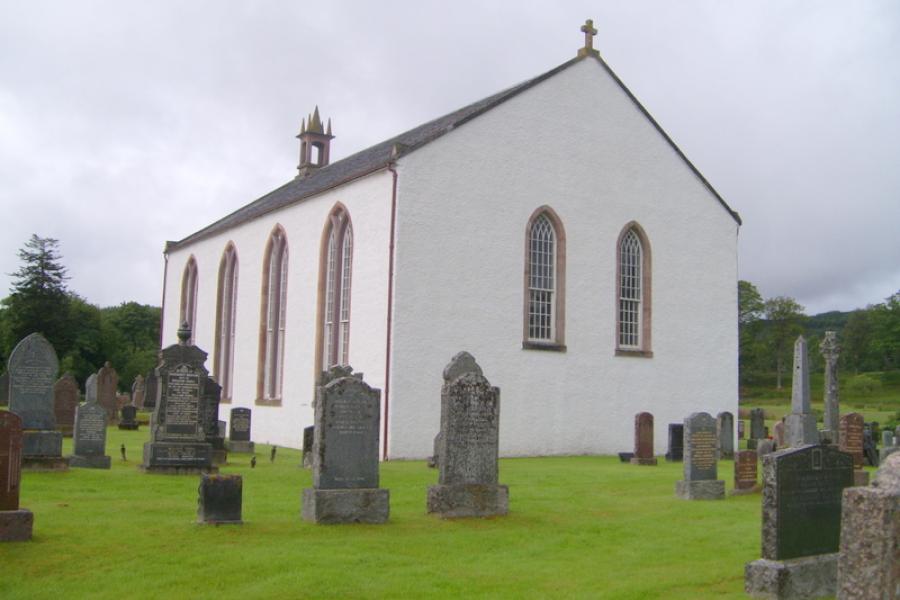
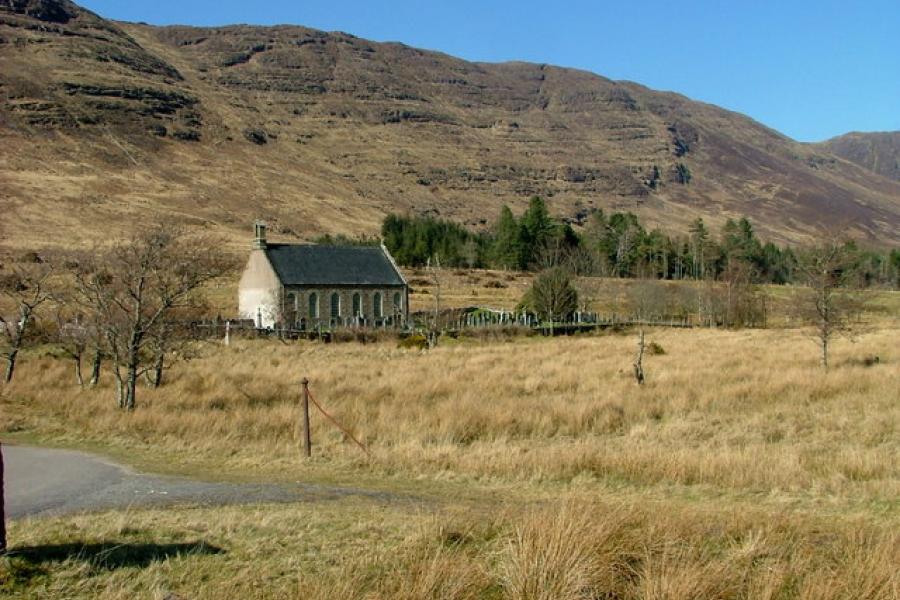
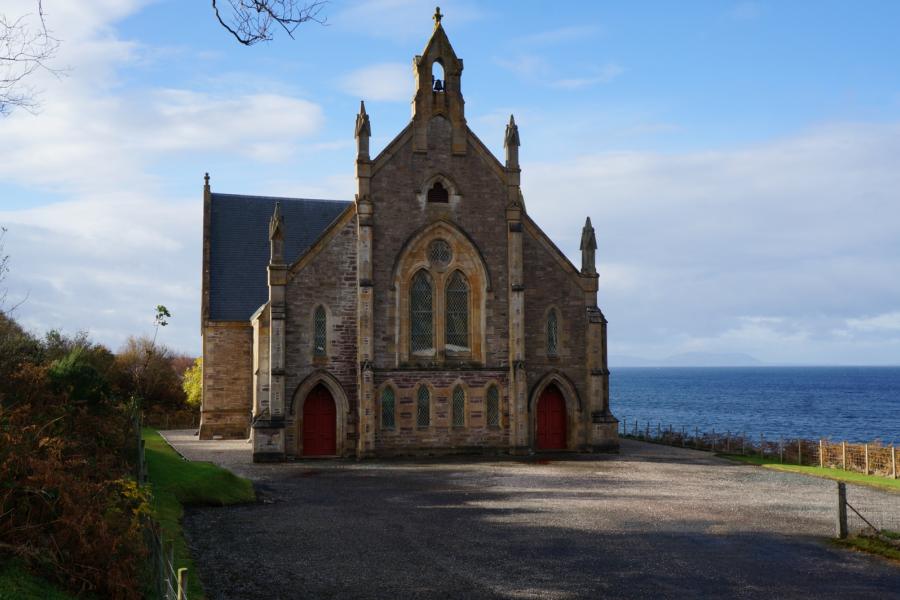
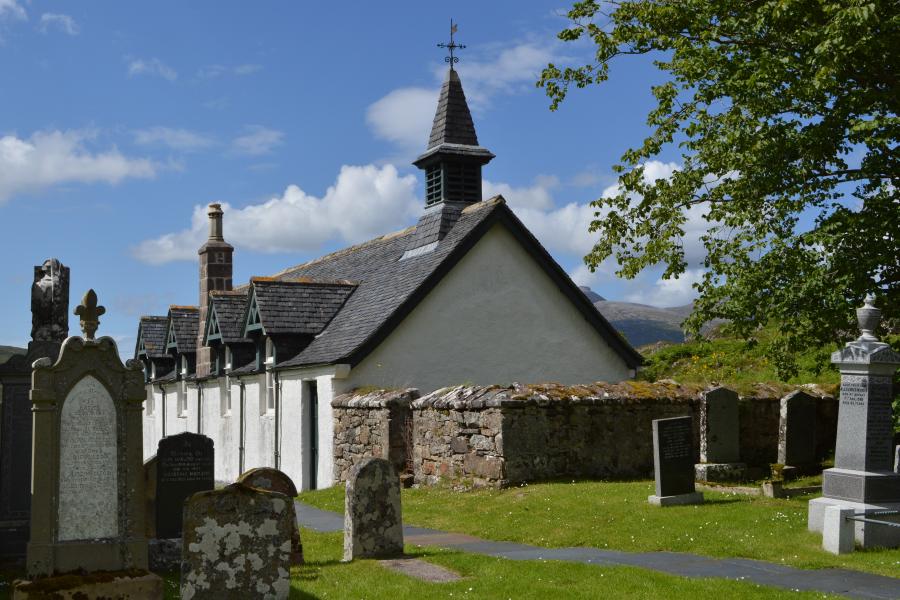
Encircling the far north of Scotland, the North Coast 500 has become one of the country’s best-known journeys. It is famous for its dramatic scenery - but beyond the iconic viewpoints lies a quieter journey waiting to be found. This is a route shaped as much by wind and sea as by human hands, where modest churches and kirks sit close to the shore, holding centuries of local memory.

Slow down, and the landscape reveals itself differently. Modest kirks and coastal churches sit close to the shore, shaped by wind, sea, and centuries of local life. These are thin places: spots where past and present feel unusually close, where the sound of waves sharpens a connection harder to name. Exploring them feels like a gentle pilgrimage.

This guide, built from decades of local knowledge, leads you to lesser-visited heritage churches along the route. Often overlooked, they are deeply rooted in their landscapes, and they reward those who linger. We invite you to come, not just to travel the coast, but to feel it. A living, storied edge of land and water.


For practical planning, up to date travel advice, and wider inspiration, the official North Coast 500 website is an invaluable starting point, offering guidance on the route, inspiration for things to see and responsible travel advice.

Slow travel spreads its benefits more evenly - supporting local businesses and communities where services are stretched thin. Many of these churches were built to last against the elements, yet their future depends on visitors, local care, and ongoing attention. Seeking them out deepens your understanding of the Highlands beyond the well-worn trail.

Visit the official North Coast 500 website

STORYNC500Inverness(bvi4092CC-BY-SA2.0)1 bvi4092

©bvi4092

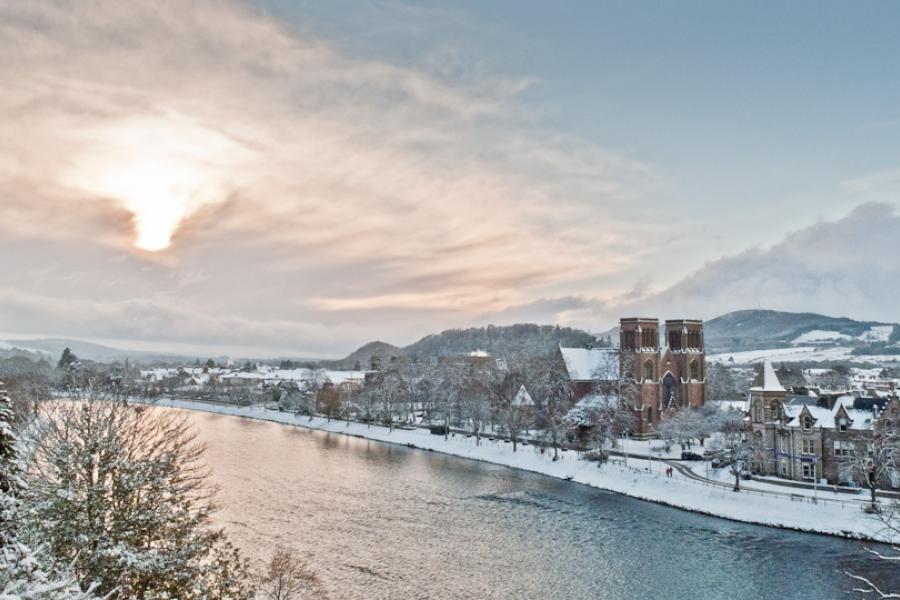
Inverness Cathedral and the River Ness from Inverness Castle

Inverness

City of the north.

Set where river, firth, and route meet, Inverness is both a beginning and a return. Long regarded as the capital of the Highlands, it stands at the mouth of the River Ness, where inland glens open towards the Moray Firth and the wider sea. For centuries, people have passed through Inverness - to trade, to depart, and to come home.

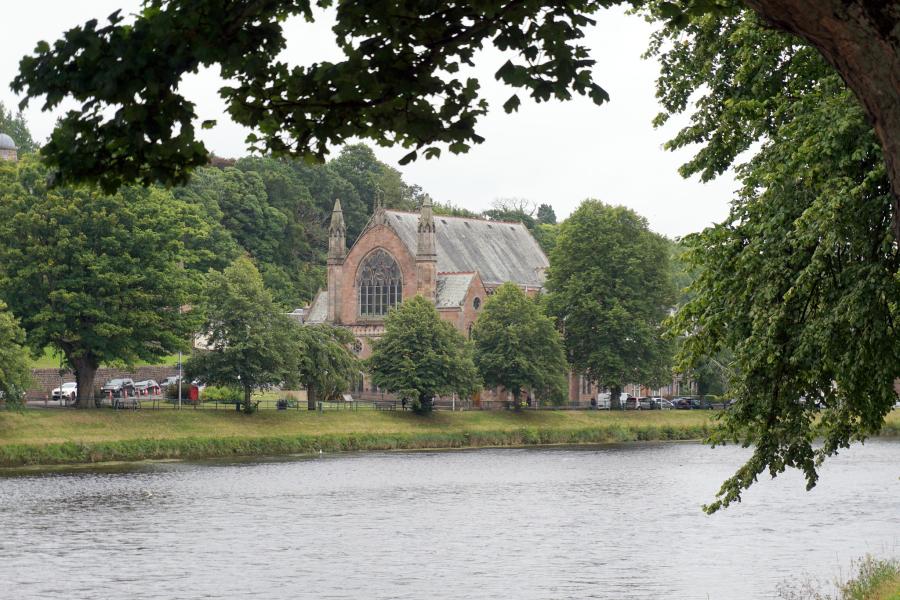
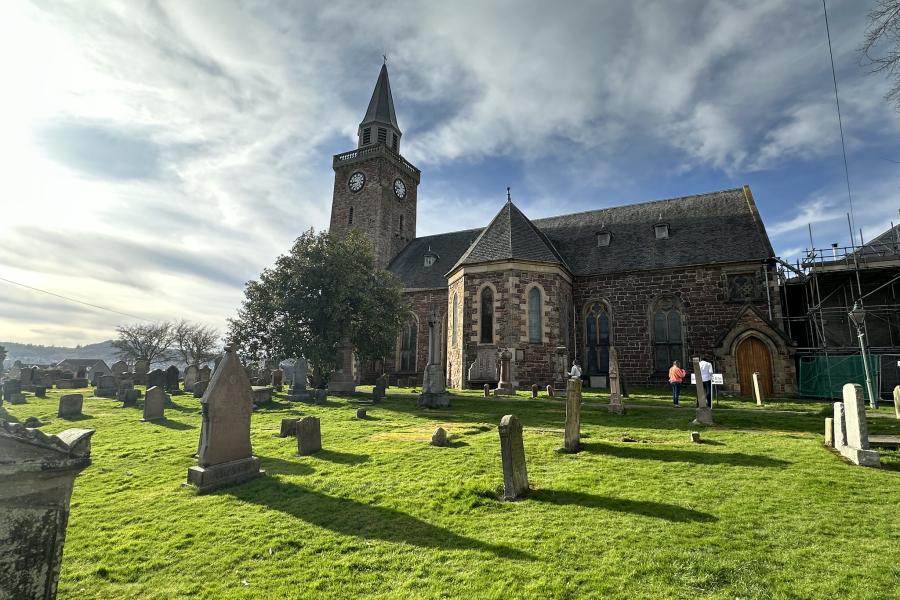
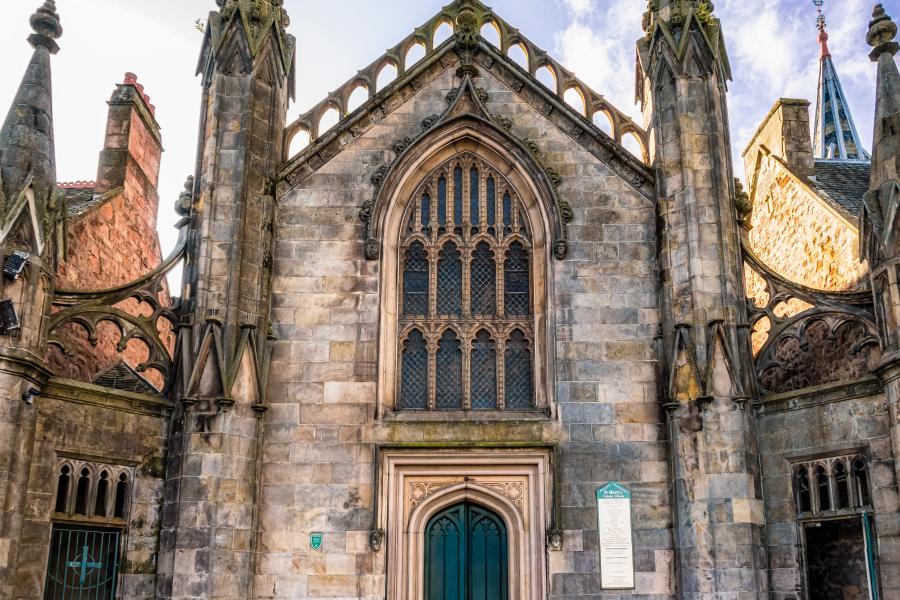
Overlooking the river, Inverness Castle marks the city’s presence, while its churches reveal deeper continuity. Inverness Cathedral, built in the 19th century, reflects the city’s role as a regional centre. Nearby, Ness Bank Church speaks to a period of rapid civic and commercial growth, part of a dense riverside landscape. Above the Moray Firth stands the Old High St Stephen, one of the oldest church sites in the Highlands, its kirkyard holds generations of family names, linking town, countryside and sea routes. The Free North Church recalls the Disruption of 1843 and Inverness’s role in religious debate and reform and, back across the river, St Mary's church holds beautiful new stained glass, an icon and a statue commemorating the 400th anniversary of St John Ogilvie’s martyrdom.


As the start of the North Coast 500, Inverness offers orientation; at the end, it offers perspective, revealing the journey not as a simple circuit, but as a network of communities bound by landscape and heritage.

STORYNC500LochAchnasheen(RichardSzwejkowskiCC-BY-SA2.0)1
© RichardSzwejkowski
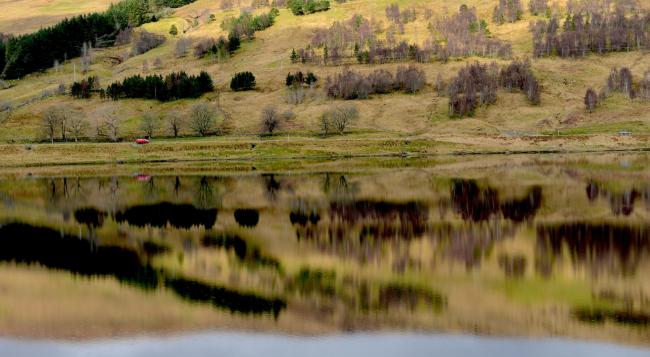
Loch Achnasheen on the Inverness to Applecross stretch

Inverness to Applecross

Inland distances, mountain silence, the first sense of leaving behind.

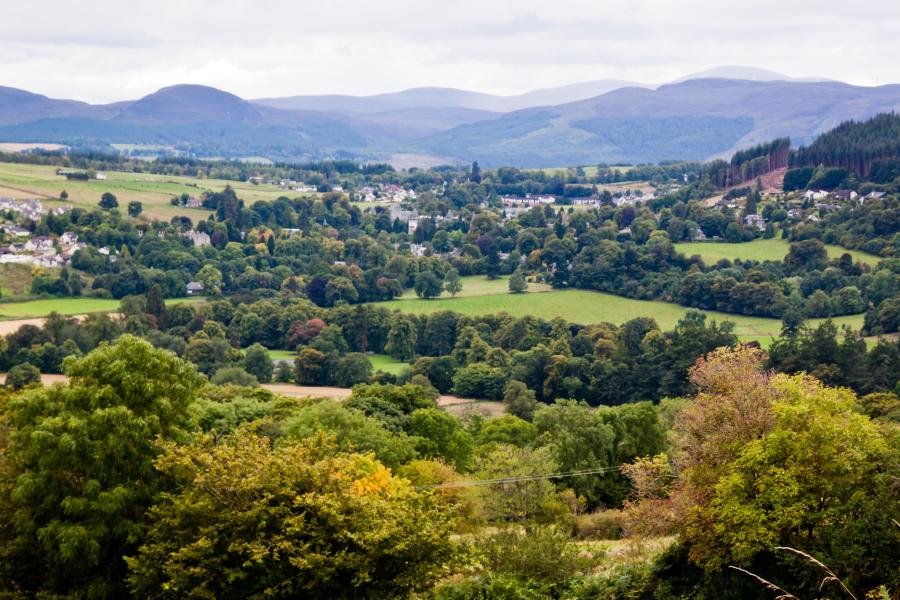
From Inverness, the road slips west into Ross-shire, lengthening with every mile. The land opens gradually, peat and heather rolling beneath the distant presence of Ben Wyvis, before the route begins to follow river and glen into quieter country.

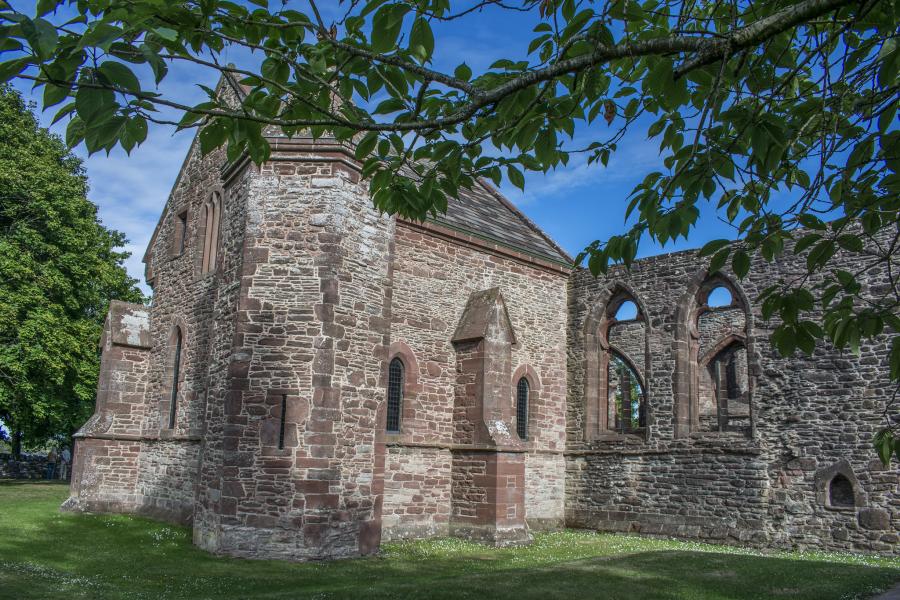
Beauly invites a contemplative pause. The ruined Beauly Priory sits in a wooded riverside setting, its stone carvings and open cloister bearing witness to centuries of Valliscaulian devotion. Nestled nezt to the ruins, St Mary’s church rises as a harmonious red sandstone ensemble, linking centuries of sacred architecture along the route.

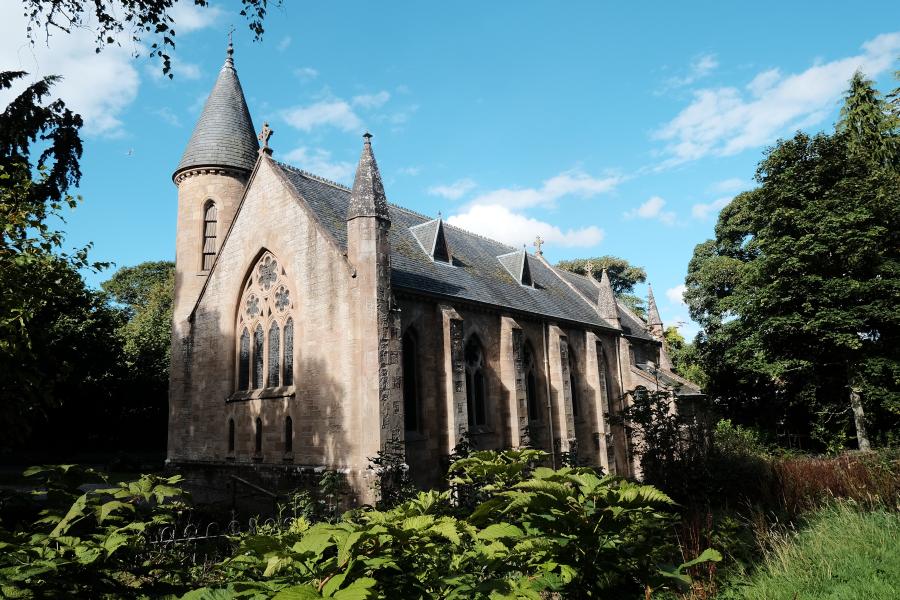
At Strathpeffer, the journey meets a landscape shaped by visitors as much as residents. The Arts & Crafts Gothic Strathpeffer Parish Church, built between 1888 and 1890 during the town's spa heyday, speaks of a time when health, travel,and faith combined to shape new Highland communities. Nearby, St Anne's church, with its circular princess-style tower, offers a quieter moment of reflection in a Healing Garden dedicated to Anne, Duchess of Sutherland and Countess of Cromartie.

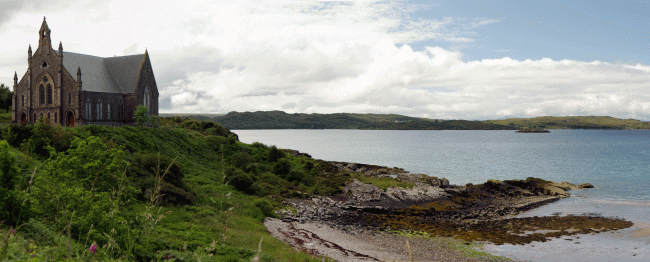
Further west, Lochluichart Kirk stands beside the water at Kinlochluichart. Built in 1827 to a Parliamentary design by one of Thomas Telford's surveyors, it reflects a national effort to serve remote communities. Its graveyard holds a prominent monument to Louisa, Lady Ashburton - a reminder of the personal stories carried within even the smallest kirks. Next along the winding road, the modest Lochcarron Parish Church, designed by William Mackenzie in 1910, represents a later chapter in Highland religious life, when communities continued to invest in shared spaces despite economic uncertainty.


Eventually, after miles that feel unhurried, you reach Applecross - long defined by its isolation. For centuries accessible only by boat or the steep Bealach na Bà, even today arrival still carries a sense of crossing into somewhere older.

Clachan Church looks out across Applecross Bay towards Raasay, occupying an ancient site associated with St Maelrubha's 7th century monastery. This simple, half harled church was built between 1816 and 1818, generations have gathered here on ground long marked by prayer, continuity  and memory.

Travelling slowly through this first leg supports fragile rural communities where services are limited and distances long - ensuring these places remain living communities, not simply destinations. The churches along this stretch sit quietly within a landscape shaped by long winters, maritime links, and generations of families rooted to place.


Applecross to Gairloch

Cliffs, coves, and overlooked landmarks.

North of Applecross, the road clings to a coastline broken into headlands and narrow inlets. Torridonian sandstone rises sharply inland while the sea presses close from the west, creating a landscape both austere and luminous. Further along, the sense of worship shaped by place becomes more elemental at Am Ploc Open Air Church in Torridon. Set among rocks and open sky, this outdoor gathering place reflects a Highland tradition of meeting for worship in the landscape.

The road north curves along Loch Gairloch, where sea and mountain meet in long horizons of light. Above the water stands Gairloch Free Church, its stone walls and Gothic lines set against the distant peaks of Torridon. Built between 1878 and 1881 to the designs of Matthews & Lawrie, it reflects a time when communities invested care and craft in places of worship that anchored village life.

HighlandGAIRLOCHFreeChurch(StuSmithCC-BY-ND2.0)1
© StuSmith
Gairloch Free Church and bay

Gairloch to Poolewe and Aultbea

Sheltered waters and contested histories.

The landscape softens as the route approaches Poolewe, where river, garden, and sea converge in a sheltered meeting of elements. St Maelrubha’s church reflects a complex religious history: after the Jacobite rising of 1745, Episcopal worship in the northwest Highlands endured suppression, and congregations often met discreetly, sustained by persistence and faith. The present church, dedicated in 1965, occupies a building that once served as a cow byre.

Following the shoreline of Loch Ewe, the road continues to Aultbea. Here, Aultbea Free Church stands prominently on the waterfront, its 19th century form facing the harbour and open water beyond. Closely associated with the fishing families who built the village, the absence of a graveyard is striking, emphasising its role as a place of gathering at the edge of the sea.

STORYNC500ApplecrossPass(RobinChrystieCC-BY-SA2.0)1 RobinChrystie

©RobinChrystie

Bealach na Bà (Applecross Pass) is a historic, single track mountain road renowned for its dramatic ascent from sea level to 2,054 feet (626 metres) and views across to Skye

Aultbea to Ullapool

From working shore to gateway port.

Between Aultbea and Ullapool, the road alternates between open moorland and sudden views of sea and mountain. The landscape feels both remote and connected - though only around 45 miles west of Inverness, Ullapool has long functioned as a point of departure: to the Western Isles by ferry and further by emigration.

The churches of Ullapool reflect this layered history. St Martin of Tours, the most north-westerly Catholic church on the Scottish mainland and a small white-harled building, was converted from a bakery by architect Robert Hamilton MacIntyre. Ullapool Parish Church, reconstructed in 1906, recorded baptisms, marriages, and burials for families whose lives were often marked by departure as much as settlement. For many who left, this building or its predecessor was the last place their name was written down before the crossing.

STORYNC500Ullapool(SeánÓDomhnaillCC-BY-NC-ND2.0)1
© SeánÓDomhnaill
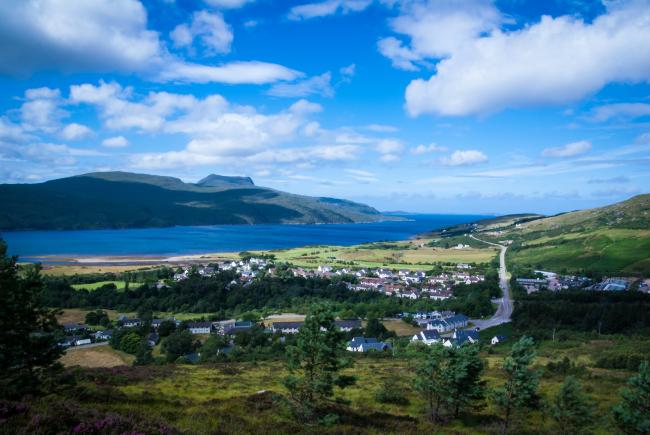
Ullapool, on the shores of Loch Broom, with stunning views of rugged mountains, calm waters, and the Summer Isles

Ullapool to Kinlochbervie

Planned faith in an unplanned land.

North of Ullapool, distances expand dramatically. Crofting townships appear and disappear, pale beaches curve beneath dark ancient hills, and the road begins to feel like a thread through a landscape that has never quite submitted to order.

At Lochinver, Assynt Parish Church makes that tension visible in an unusual way. Built in 1845 in Nairn, it was dismantled, transported, and rebuilt on the seafront in 1903 by the Gordon family - a journey that echoes a coastline shaped by movement, clearance, and resettlement. It now houses artwork by local artist Lizzie McDougall and offers a welcoming place to stop for a cuppa.

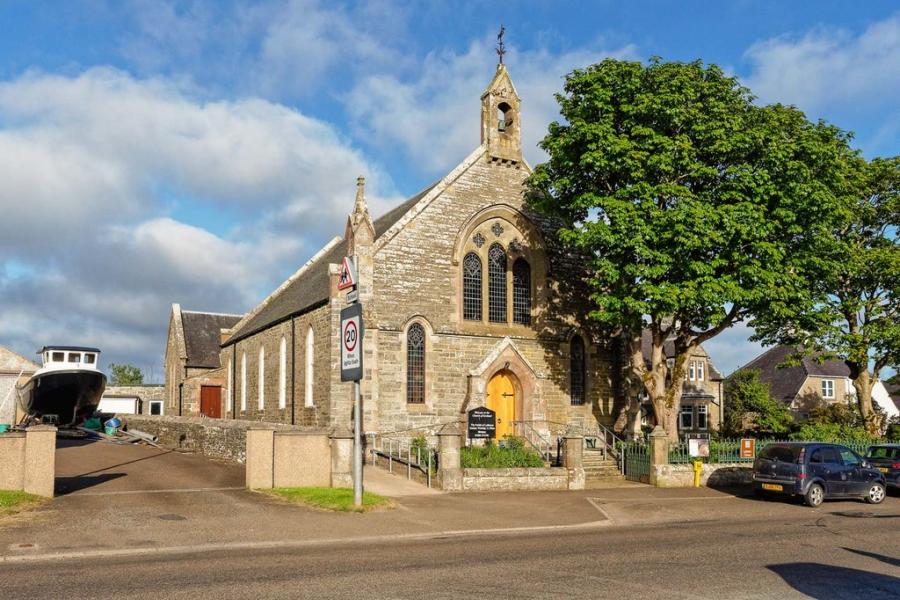
Further north, at Kinlochbervie, the Free Presbyterian Church, designed by Thomas Telford in 1829, is one of the Parliamentary churches built to bring worship and schooling to remote Highland communities. Their T-Plan will become recognisable, and seeing several along a single route reveals how national policy once moved through this landscape with the same quiet persistence as the roads themselves.


Kinlochbervie to Durness

Ruins, sand, and exposure.

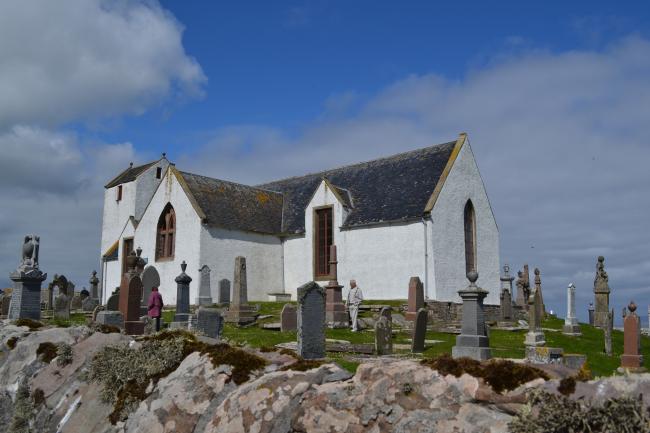
As the road swings east, the landscape opens into an elemental northern coast of wide beaches and open skies, where churches feel inseparable from the land they occupy. Near Durness, the ruins of Balnakeil Old Church bring the coast to its most elemental. Ruined churches offer their own kind of encounter, open to the sky and approached on foot, where family histories remain written into the land, gravestones weathered by salt air and time.

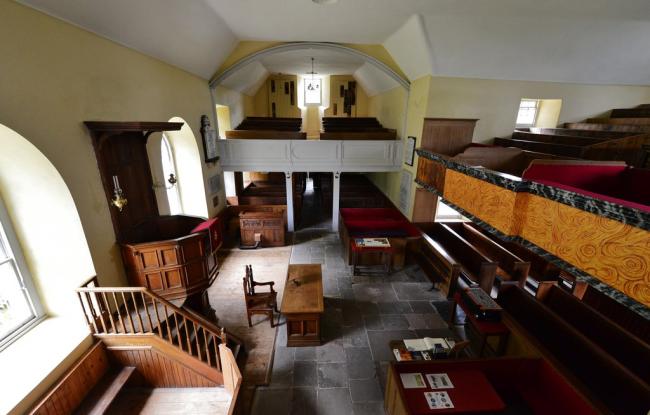
Across the Kyle of Tongue at Melness, a smaller story unfolds. Melness Church, opened in 1902 and built from local stone, has a simple interior lined with timber shipped from Scrabster. A simple communion table and balustraded pulpit give the space its quiet character. It was largely funded through the efforts of Revd Cathel Kerr, who died serving as a chaplain in the Boer War before seeing it completed. That history sits lightly in the building, but it is there.

The medieval St Andrew’s church, Tongue was rebuilt in 1680 by Donald Mackay, Master of Reay, and remains a serene space shaped by centuries of Mackay family history still legible in stone and timber. Nearby at Bettyhill, Farr Parish Church stands beside the older Clachan church of 1774. Its graveyard contains the Christianised Pictish Farr Stone and the old church houses a museum of the Clearances and Clan Mackay history.

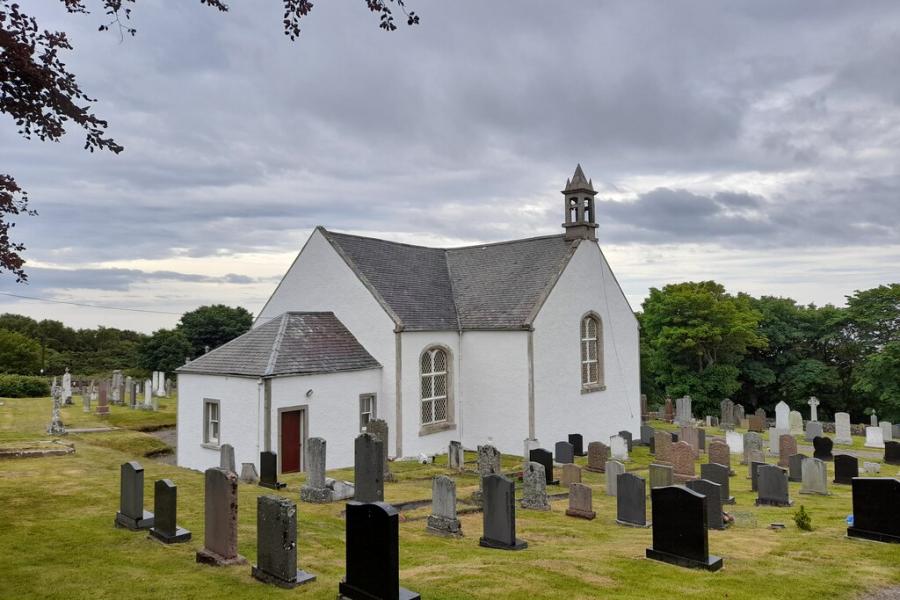
Heading east, the white-harled Reay Parish Church, built in 1738–39, holds a quiet prominence above Sandside Bay, its pyramid-roofed bell tower characteristic of the Scottish vernacular tradition. The interior retains its central communion table and hexagonal pulpit, while the adjacent churchyard holds notable Mackay family memorials. Inland at Thurso, St Peter & Holy Rood, built in 1885 to designs by Alexander Ross, reflects a more Victorian register. Its s interior is enriched by AL Moore stained glass depicting the Good Samaritan, a historic pew back from Old St Peter's and 18th century pewter communion vessels that have outlasted the congregations who first used them. Also in Thurso, St Peter & St Andrew and the United Reformed Church, originally founded on the seafront in 1799 during the Haldane revival and rebuilt in 1872 to escape sea encroachment, are also worth a visit.

At the far northeastern edge, near John o’ Groats, Canisbay Church stands as the most northerly place of worship on the Scottish mainland. Sacred since the 6th century mission of St Drostan, the largely 17th century church preserves layered evidence of a community anchored here across the centuries.

HighlandCANISBAYCanisbayChurch(TerryRobinsonCC-BY-SA2.0)1
© TerryRobinson
Canisbay Church, one of several Parliamentary Churches along the route, designed by Thomas Telford and built across the Highlands
HighlandDORNOCHDornochCathedral(johnhaslamCC-BY-2.0)3 JohnHaslam

©JohnHaslam

Dornoch Cathedral from the beach

Durness to Keiss

Across the north coast.

Turning east, the Atlantic gives way to the North Sea. The coast hardens, bays deepen, and fishing villages reappear. At Keiss, another of Telford’s churches rises above Sinclair’s Bay. Keiss Village Church, built in 1827, anchors a community long shaped by fishing and maritime trade, its simple form echoing others encountered earlier on the route.


Keiss to Lybster and Berriedale

Herring wealth and narrowing roads.

Crossing the peaceful River Wick, rich in wildlife, the planned streets of Pulteneytown open around the grand Parish Church, built in 1842 as the centrepiece of Thomas Telford’s Argyle Square for the booming fishing community. Nearby, St John the Evangelist, built in 1870 at the height of the herring boom, reflects the town’s rapid growth and enduring maritime heritage.

Further south, Lybster tells the story of 19th century expansion driven by the herring boom. St Mary’s church, Lybster, designed by William Davidson and built in 1836 to an austere classical design, reflects this period of confidence. At Berriedale, the landscape tightens dramatically, where Berriedale Church and its burial ground sit close to the shore, marking the southern edge of Caithness before the route re-enters Sutherland.


Berriedale to Dornoch and Cromarty

Continuity, restoration, return.

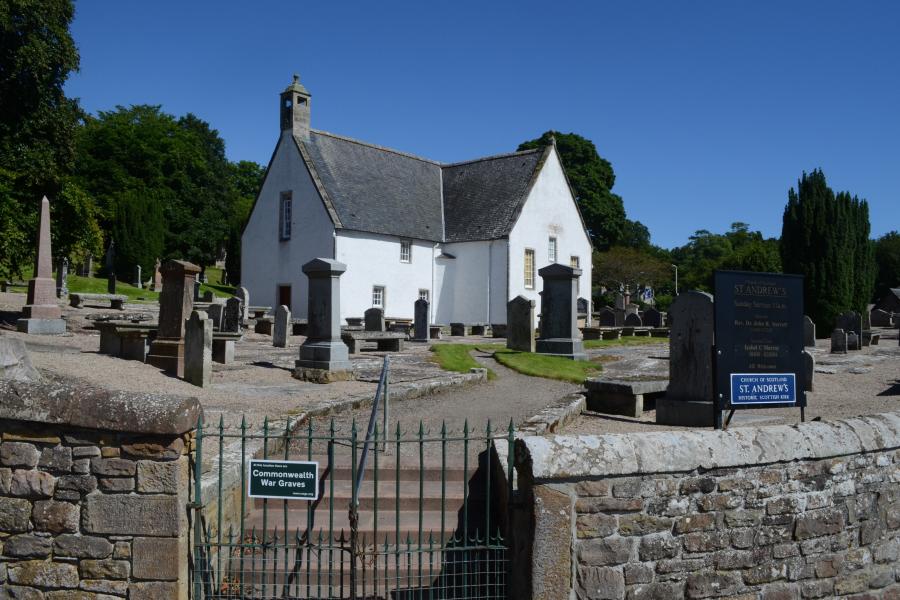
As the road turns south towards Golspie, the landscape softens into wide coastal views. Here, St Andrew’s church, the Earl of Sutherland’s former chapel with roots in the 13th century and rebuilt in 1619, stands as a refined and enduring presence, its carved pulpit and laird’s loft embodying what Pevsner described as “the epitome of the Georgian parish kirk.”

Crossing into gentler terrain, the Dornoch Firth widens and the sense of exposure eases. Dornoch Cathedral rises above the town, its 13th century origins and central tower setting it apart from the parliamentary churches encountered elsewhere. Restored in the 19th century by William Burn, it offers a rare sense of architectural continuity. 

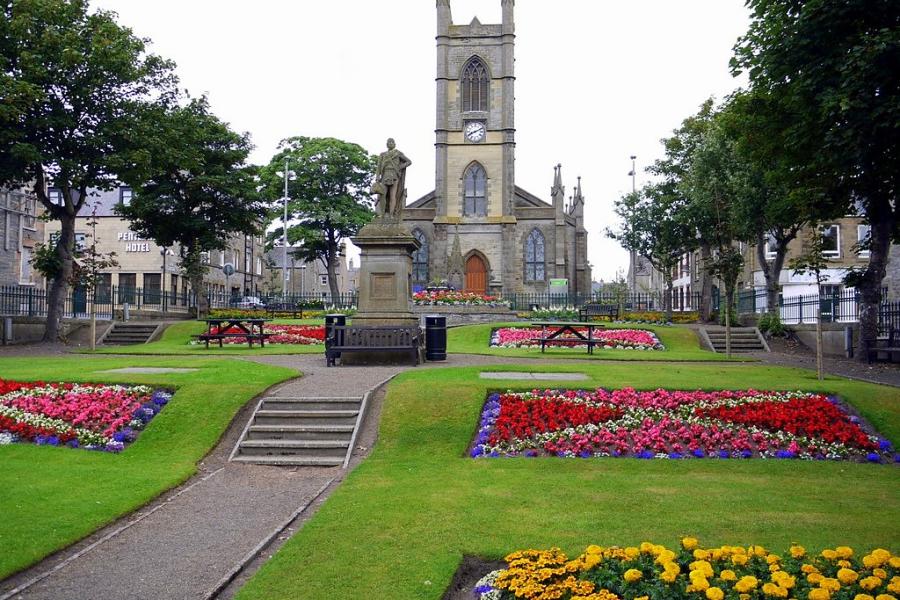
Across the firth lies Tain, a conservation area and home to St Andrew’s church, designed by Ross and Macbeth in 1887. The final turn brings the route back towards Cromarty, at the tip of the Black Isle, where the East Church, with origins in the early 17th century, looks out across the water. Low, harled, and quietly assured, it feels like a natural place to pause: a reminder that this journey is not only about distance covered, but about layers of life, belief, and family history encountered along Scotland’s long edge of sea.

HighlandCROMARTYEastChurch(michaelgarlickCC-BY-SA2.0)1
© MichaelGarlick
The beautiful interior of East Church, Cromarty - cared for by Historic Churches Scotland
STORYNC500GairlochBay(GeorgeBaylissCC-BY-NC2.0)1 GeorgeBayliss

©GeorgeBayliss

Gairloch harbour towards the snow covered Meall na h-Uamha.

Discover more churches along the coast

Churches of the Causeway Coast

Explore a giant spirit as you journey along Northern Ireland’s breathtaking Causeway Coast, where ancient churches stand side by side rugged castles as timeless witnesses to history and architecture.

The Coastal Way

Hundreds of ancient atmospheric Welsh churches are sited within a stones throw from, and even occasionally on, the beach, promontory or headland. These are the places founded by 5th and 6th century Saints; intimately connected to the landscape, with carved Ogham stones, Celtic crosses and an atmosphere inside to make your spine tingle. They are found teetering on clifftops and sunk low on beaches, hidden deep in valleys and high up on soaring hilltops.

Edge of the World

The UK has just over 40 tidal islands, some large, many very small. The best are home to unique churches and chapels, often with monastic beginnings and built for peace and tranquillity. The isolation of these seaside sanctuaries means many are also natural havens of flora and fauna. Their remoteness lends them an air of mystery and enshrines their place in local folklore.

Wales coast path walks

The stunning coastal landscape of Wales has held allure for pilgrims, poets and travellers for millennia. Hundreds of ancient atmospheric Welsh churches are sited within a stones throw from, and even occasionally on, the beach, promontory or headland. Teetering on clifftops and sunk low on beaches, hidden deep in valleys and high up on soaring hilltops.

Seaside specials

We have chosen some of our favourite seaside getaways. All have delightful churches nestling in their narrow lanes, or braving the elements on windswept clifftops. They are woven into the fabric of the resort and offer a retreat from the midday sun, providing you with a place to relax and take time out.