
Holy Trinity
Caister on Sea, Norfolk
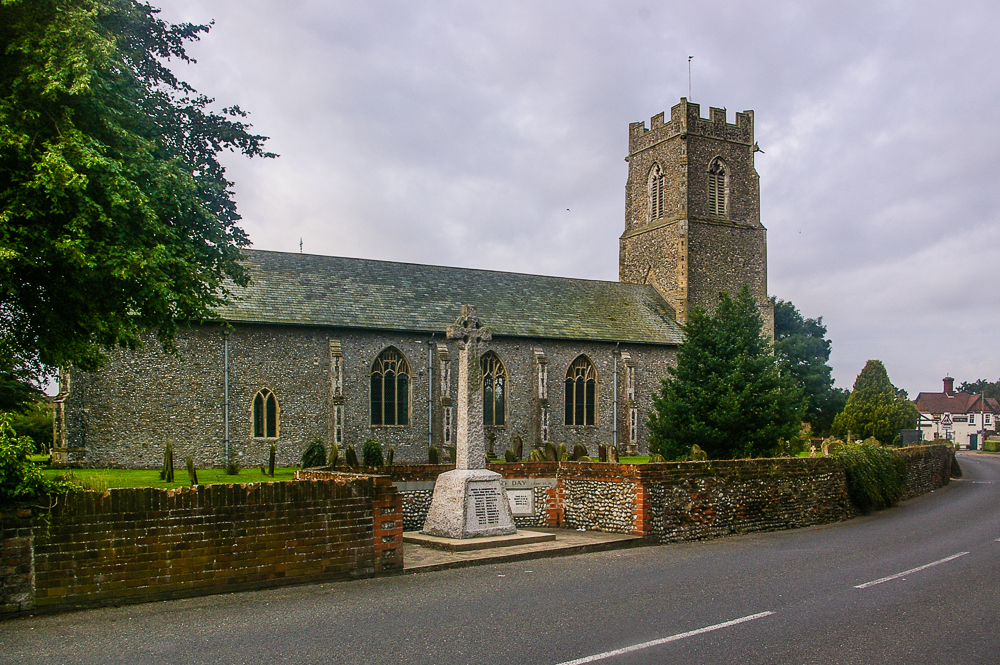
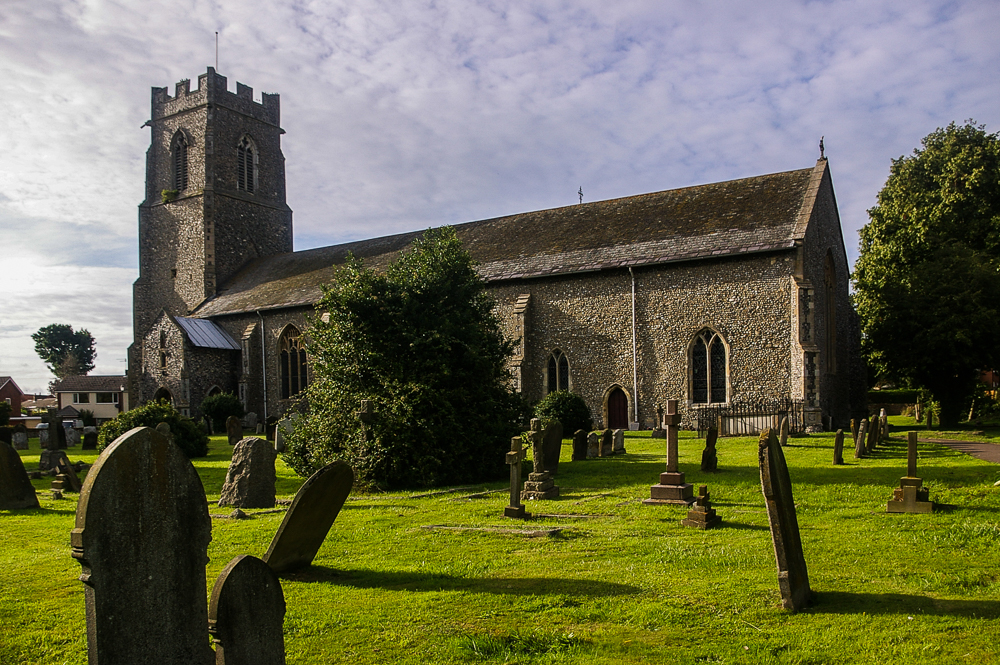
You are welcome to visit and explore Caister's historic parish church, dating from the 13th century, standing on an ancient site with Roman and Saxon heritage (just down the road from Caister's Roman fort).

Our church has many medieval features including roof bosses and our font.
Hemsby, Norfolk
There was a church in Hemsby when the “Domesday Book” was compiled; the present building dates from the early 14th century and is largely medieval in the decorated and perpendicular styles of architecture. The 14th century square embattled tower contains a clock erected in 1870 and is decorated with flush work at the base and on the battlements.
The two-storied south porch has a vaulted ceiling with carved stone bosses (depicting God the Father and the key scenes from the New Testament), which is incredibly rare for a village church. The upper storey contains a “Parvise” or Priest’s Room which would have been used by the monks from St Benet’s Abbey when attached to this church. The room has been set apart as a small chapel for private prayer and is open to the public. Inside the main body of the church, the interior is mostly the 19th century work but the bosses on the roof and the font decorated with lions and symbols of the Evangelists are medieval.
The lovely east window dates from 1985, and perhaps the most unusual detail is found in the piscina - the drain is set within a lion’s mask. The church has Grade II listing and has numerous specific and rare features.
Caister on Sea, Norfolk
You are welcome to visit and explore Caister's historic parish church, dating from the 13th century, standing on an ancient site with Roman and Saxon heritage (just down the road from Caister's Roman fort).
West Somerton, Norfolk
14th century wall paintings.
Hickling, Norfolk
The village of Hickling lies on the largest of the Norfolk Broads, an area that is renowned internationally for wildlife conservation. Photo credit: John Fielding CC-BY 2.0