
St Martin
Laugharne, Carmarthenshire
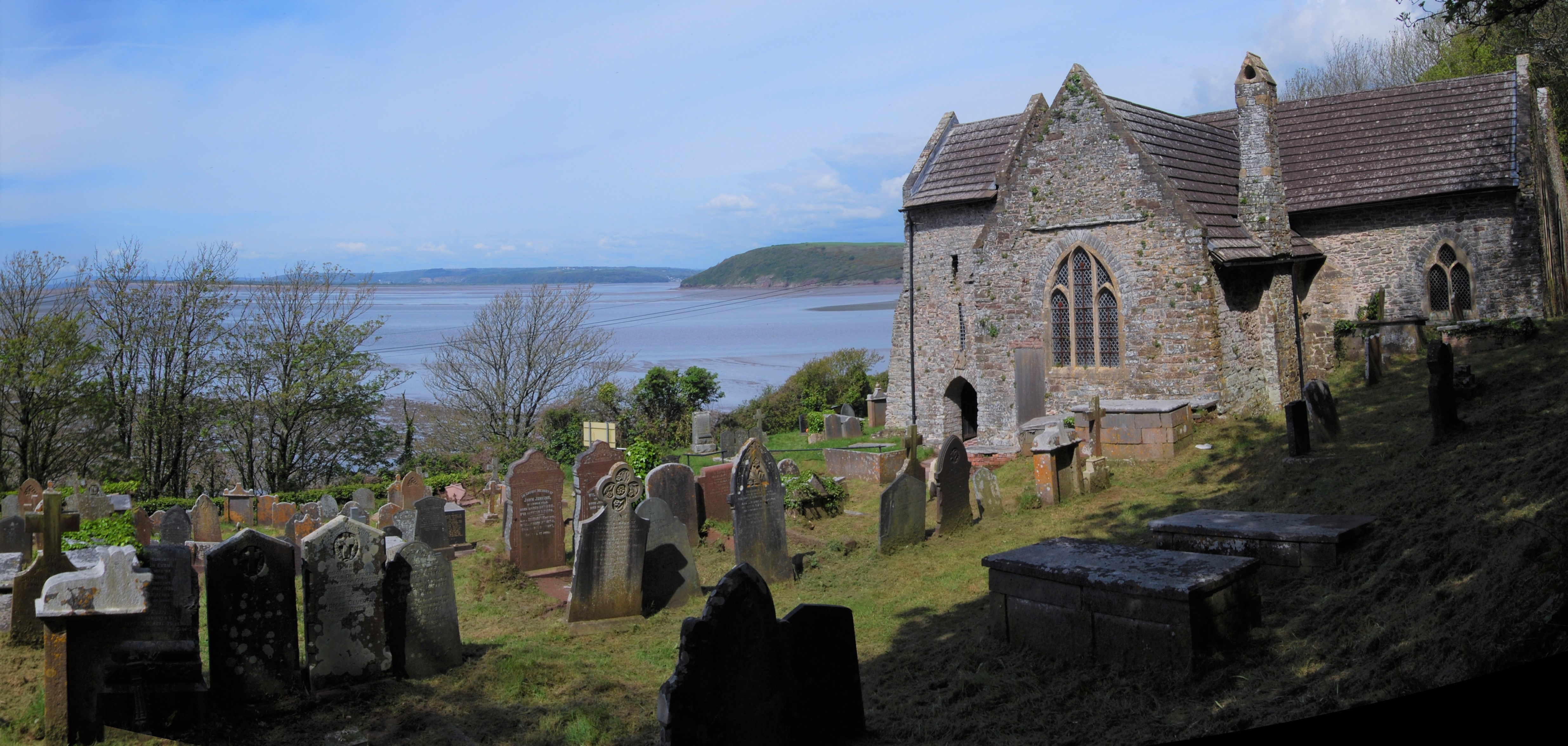
Thousands of people come here every year to see the grave of poet Dylan Thomas, marked by a simple white cross.

Perched on the side of a hill overlooking the estuary of the River Towy and the magnificent sweep of Carmarthen Bay, this church has been a place of worship for more than a thousand years, and a chapel of ease for pilgrims on the route to St David’s in Pembrokeshire.
Ferryside, Carmarthenshire
The church includes a 13th century nave and chancel, 14th century transcept and 15th century north aisle. The tower is a later addition and may have been lowered at some point following storm damage. There is a sundial over the entrance dated 1725.
The inside of the church is larger than appears from outside and is quite plain with just a few memorial tablets and marked burials. There are possibly burial vaults beneath the floor. A display in the vestry tells of the church’s association with the Rebecca Riots of 1843.
The church is 40 metres from high water mark, and 400 metres away to the south west buried in sand is what might have been the original settlement served by the church. Excavations have been carried out from time to time when the shifting sands have allowed, but no definite conclusions have been reached as to its age. It is suggested that the great flood of 1607/8 (possibly a tsunami) was responsible for its disappearance.
The graveyard was a great source of interest not least because facing towards the east as most of the headstones do, they have not been subject to the scouring action of the west wind, and even older inscriptions are legible. An important 19th century tomb is that of Hugh Williams, the radical lawyer who sympathised with the Chartists and Rebecca Rioters: the grave is shared with his brother, William Williams, who served as a Lieutenant in the Brazilian Navy.
Laugharne, Carmarthenshire
Thousands of people come here every year to see the grave of poet Dylan Thomas, marked by a simple white cross.
Burry Port, Carmarthenshire
Unique chapel established in 1812 with lovely Art Nouveau features and an interesting history.
Carmarthen, Carmarthenshire
St Peter’s is first recorded in the Chronicles of Battle Abbey when it was donated to Battle Abbey, along with a monastic house known as Llandeulyddog, in about 1110.