
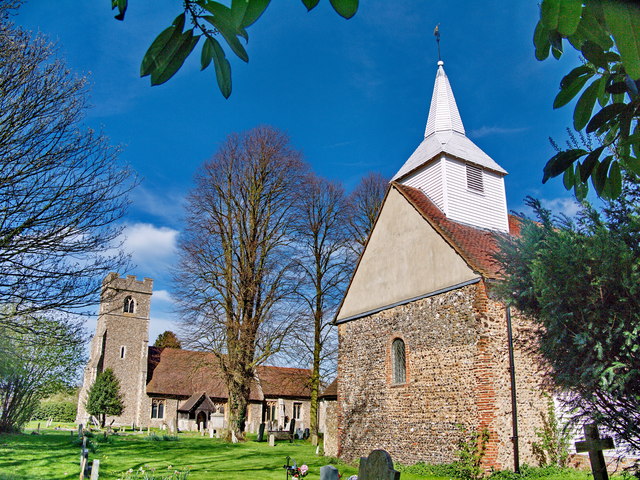
St Andrew
Willingale Spain, Essex
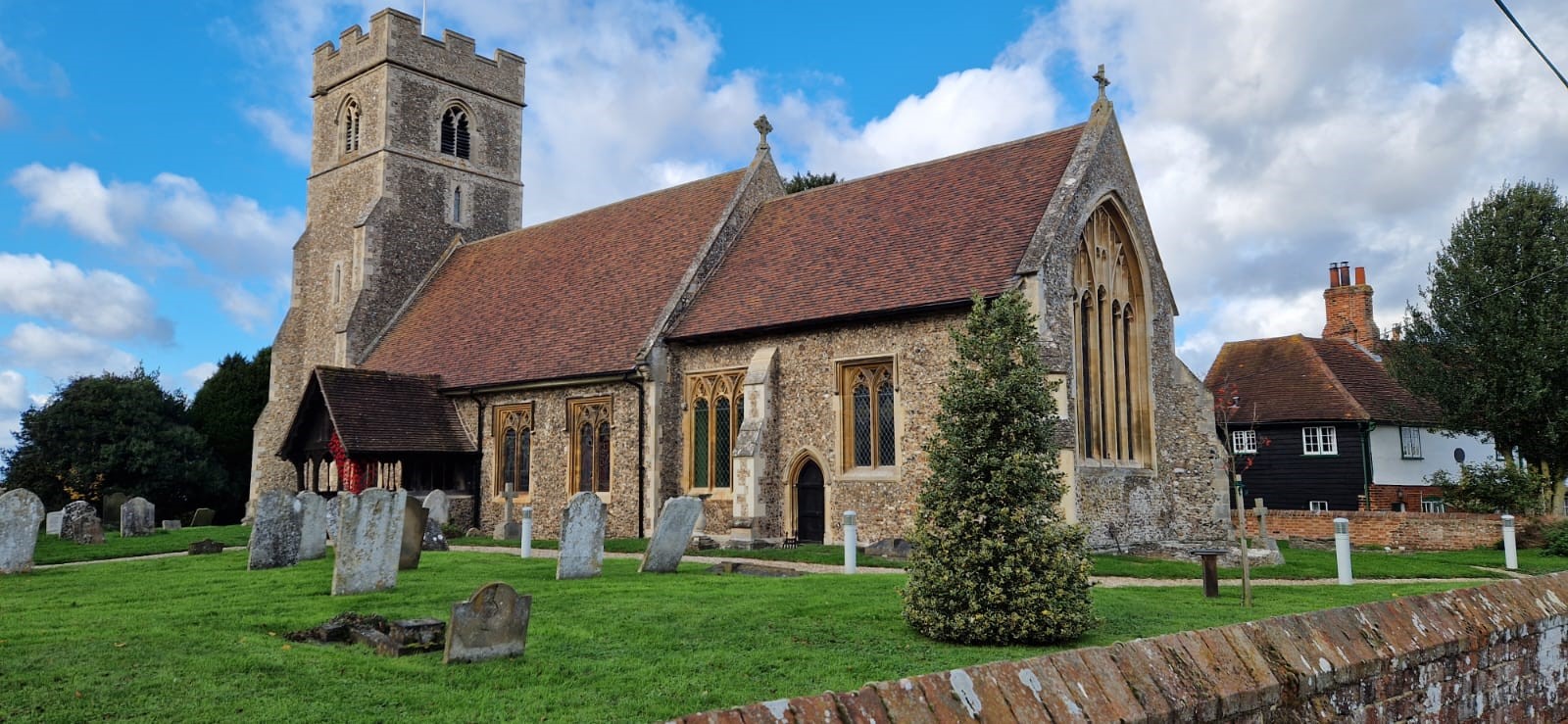
Mainly Norman, with traces of reused Roman brick, St Andrew's has a pretty clapboard bell turret and porch, and shares a churchyard with the later church of St Christopher.

The beautiful church of St Christopher was built in 1320. It is unique in sharing a churchyard with the older church of St Andrew & All Saints.
Willingale, Essex
The expenditure of much love, care and money in recent years has restored much of St Christopher's beauty, and we are especially proud of the restoration of our beloved bells.
We are unique in that we share the churchyard with our sister church of St Andrews & All Saints and straddle the Essex Way. There has been some speculation as to why Willingale has two churches and one popular story is that two sisters quarrelled and each built their own church. This story is without foundation as the churches date from different periods.
The real reason is found in the names of the parishes: Spain & Doe. Harvey D’Espania built Spains Hall and the Church of Willingale Spain, giving his name to the parish, in the 12th century. In the 14th century the D’ou family came to live in Willingale. Around this time the wool industry was flourishing in Essex, and the population greatly increased. The existing church was too small to accommodate the increased number of worshippers, and rather than pull down the old church and replace it with a new one, a second church was built next to the original. The two churches are now united into one parish, the parish of Willingale. Until 1929 they were separate and quite distinct, each with its own rector.
The two churches became famous when Rowen Atkinson bought his character Mr Bean to life for a Comic Relief clip, and you can guess… he attended the wrong funeral in the sister church! Villagers were invited to join in the filming, which created a great buzz.
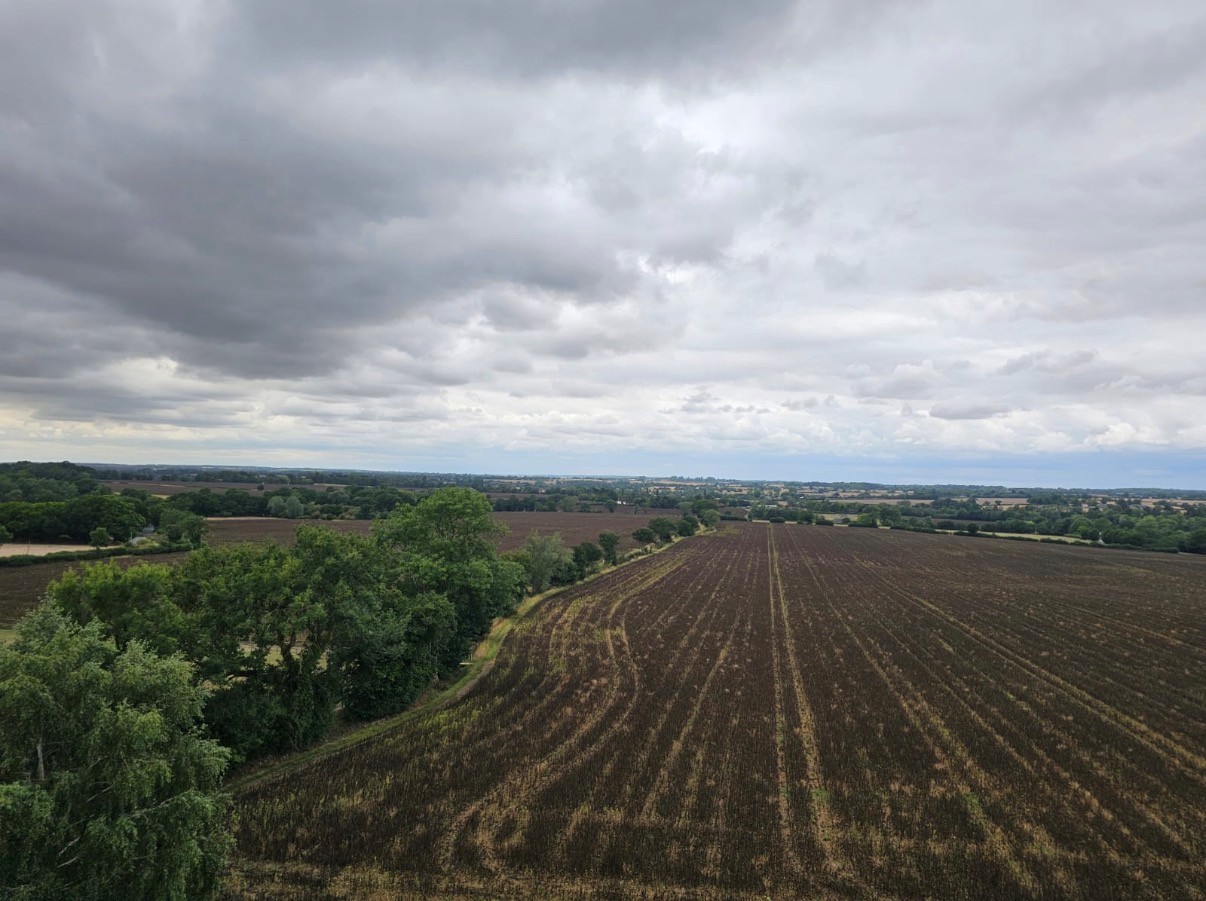
The churches have stunning views over the Roding valley and the picturesque village of Willingale, with a cricket green and numerous listed buildings. It is the ideal place for a quiet country day out or as a stopping point along the Essex Way. We also host many group visits.
The nave of St Christopher’s was built in 1320; the tower and chancel were added in the 15th century and the north aisle in 1853 at which time there was much restoration. The church now has modern facilities, but the heritage of the building has been respected. St Andrew's is mainly Norman, with traces of reused Roman brick, and has a pretty clapboard bell-turret and porch. The chancel is 15th century as are the belfry timbers, and there is a 14th century octagonal font. Some interesting memorials include two sad inscriptions dated 1614, in memory of children of the Rector.
Formerly the parish church of Willingale Spain, St Andrew's is in the care of the Churches Conservation Trust (see nearby churches below).
St Christopher’s, formerly the parish church of Willingale Doe, is used for worship and various village events, it dates from the 14th century but there is evidence in legal papers that a wooden Saxon church was previously on the site. The bells of St Christopher’s were restored in 2012 and the exterior masonry restored in 2014.
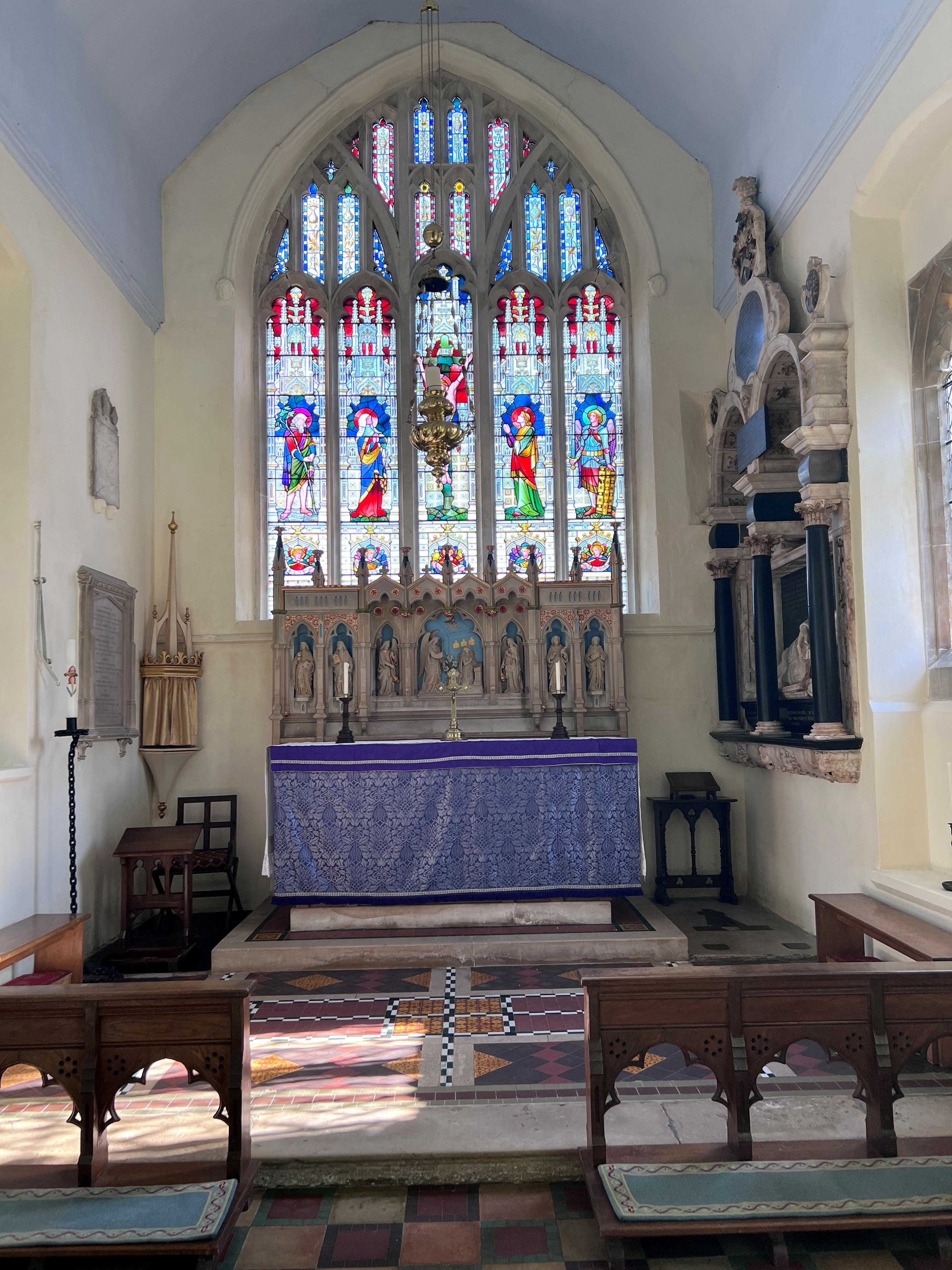
The churches contain many beautiful and very interesting stained glass windows, brasses and memorials. Local interest exhibitions are held from time to time in St Andrew's and there is information on the USAAF 387 Bombardment Group which was stationed at Willingale Airfield during WWII.
Willingale Spain, Essex
Mainly Norman, with traces of reused Roman brick, St Andrew's has a pretty clapboard bell turret and porch, and shares a churchyard with the later church of St Christopher.
Blackmore, Essex
The tower of St Laurence is one of the best of its kind in the country, and is remarkable both inside and out.
Leaden Roding, Essex
A beautifully light open and simple Norman church recorded as being part of an endowment in 1090.