St Stephen
Steeton with Eastburn, Yorkshire
St Stephens welcomes all, situated in the oldest part of the village.

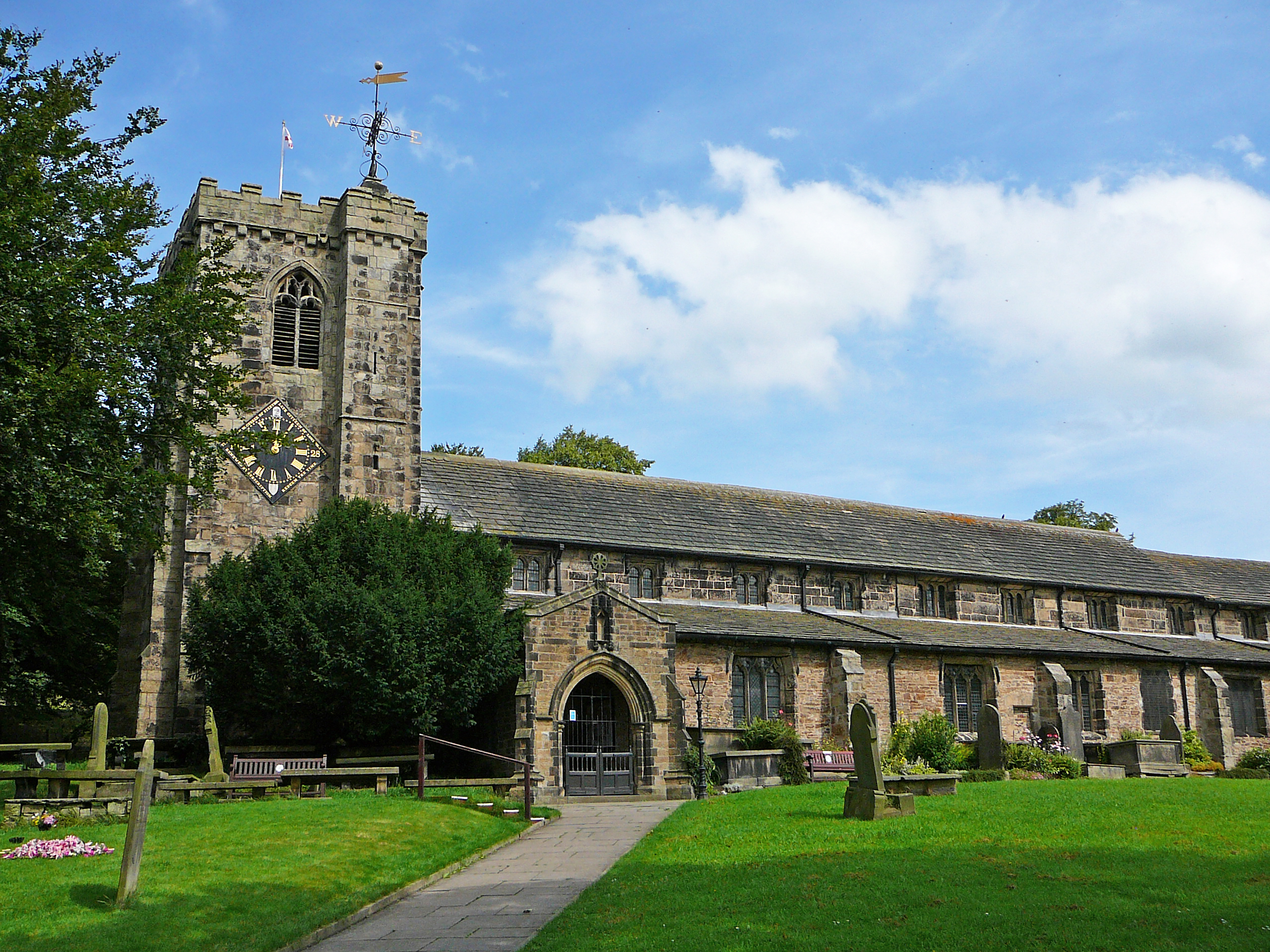
With a history reaching to the dawn of Christianity in Craven, this magnificent building tells a thousand year story with mediaeval piety and Tudor jerry building.
Kildwick, Yorkshire
The presence of early Saxon crosses speak of a stone building that must have existed on the site dating back to around the year 950. The remaining fragments of these crosses can still be seen in the church today!
The church has gone through many changes over the years, reflecting the changes in religion in the UK. Sometime between 1135 and 1140 Cecily de Romily granted the church to the Priory at Embsay, beginning a monastic connection, which lasted until the Dissolution of Bolton Priory by King Henry VIII.
In 1086 the Domesday Survey lists Kildwick as one of the two churches in Craven. Norman stonework can be seen in the 14th century building that was then added to in the 15th century, and the foundation free long chancel built by the Tudors.
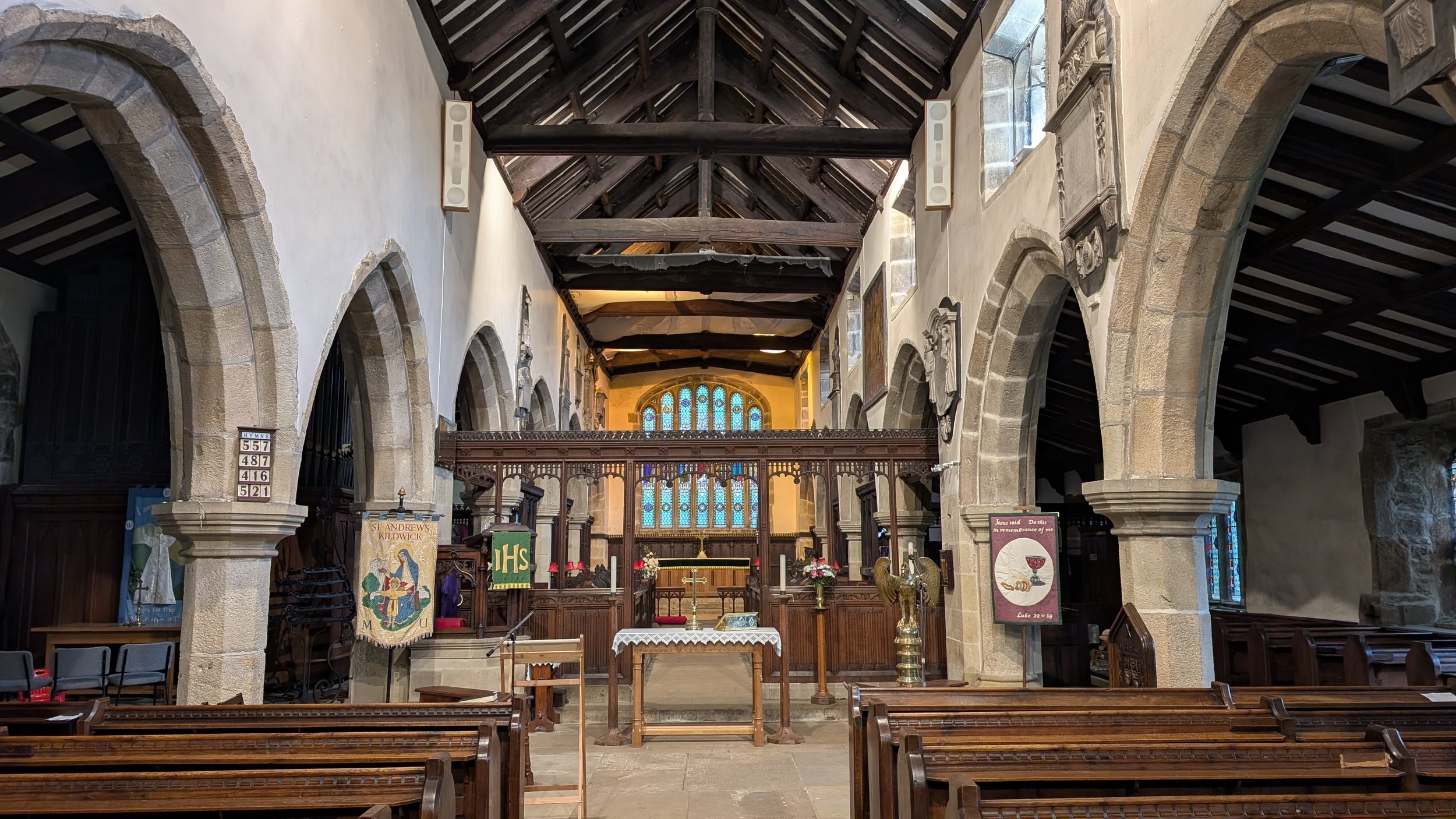
Ornate 17th and 18th century woodwork abounds. The 19th century leads to the story of the dramatic early 20th century rescue of the steeply leaning east end.
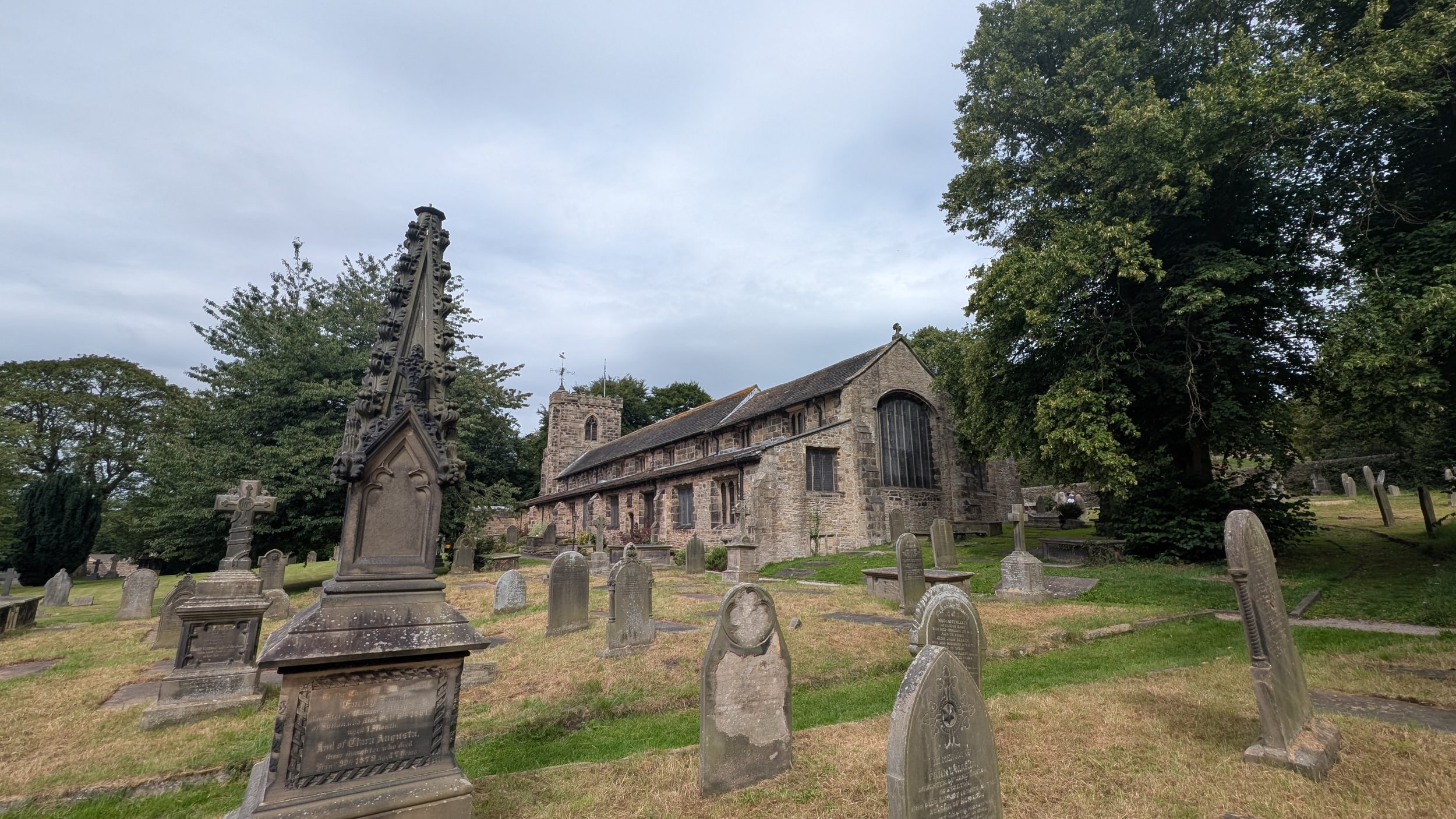
The extensive churchyard is home to five war graves, each with a poignant story to tell and the church green leads past the war memorial, past the pub with a similar ancient foundation, to the mediaeval bridge that still carries the road across the river Aire.
At the rear of the church, you will find an effigy of Knight Templar, Robert of Styveton of this parish
Steeton with Eastburn, Yorkshire
St Stephens welcomes all, situated in the oldest part of the village.
Silsden, Yorkshire
In 1712 the church was built as a chapel of ease in a farmer’s barn.
Skipton, Yorkshire
This ancient church has been at the top of the High Street for centuries, welcoming local people as well as folk from all over the world.