St John the Evangelist
Pittenweem, Fife
St John's, built in 1805, sits in the sacred quarter of Pittenweem, continuing 1500 years of pilgrimage, service and Christian worship.

The church was built in 1639 as a T plan during the post reformation period with the body of the church rebuilt in 1831 with further alterations made including the installation of high quality stained glass windows some of which were designed Edward Burne-Jones.
Elie, Fife
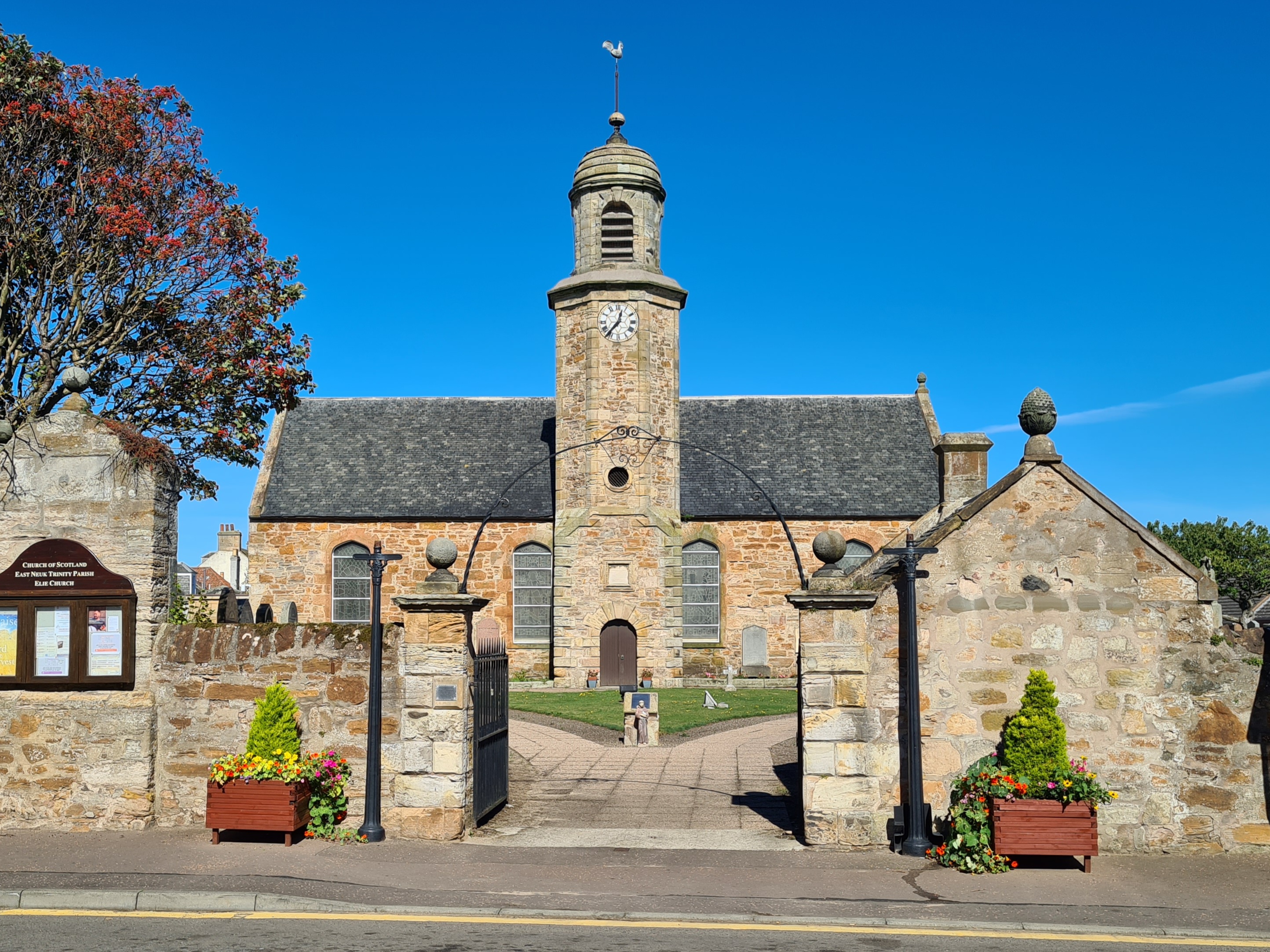
The church was built in 1639 as a T plan during the post reformation period with the emphasis on the preacher in a pulpit centred on the south long wall. Opposite the pulpit is the lairds loft with a family vault beneath. The unique clocktower was not part of the original church and was built in 1726 by Sir John Anstruther.
The body of the church was rebuilt in 1831 and has had further alterations made including the installation of high quality stained glass windows some of which were designed Edward Burne-Jones who worked in the William Morris Arts and Crafts studio. All the windows, except those on either side of the pulpit were moved from the Wood Memorial Church in Bank Street when it was demolished in the 1960s.
Pittenweem, Fife
St John's, built in 1805, sits in the sacred quarter of Pittenweem, continuing 1500 years of pilgrimage, service and Christian worship.
St Andrews, Fife
References to the Holy Trinity in St Andrews can be traced back over 1,000 years and the oldest parts of the current building are the tower and some of the pillars, which date back to the church built here in 1412.
Markinch, Fife
Markinch tower is one of the best preserved and architecturally accomplished Scoto-Norman buildings in the country and is believed to be the oldest continuously used building in Scotland, dating back to the early 12th century.