
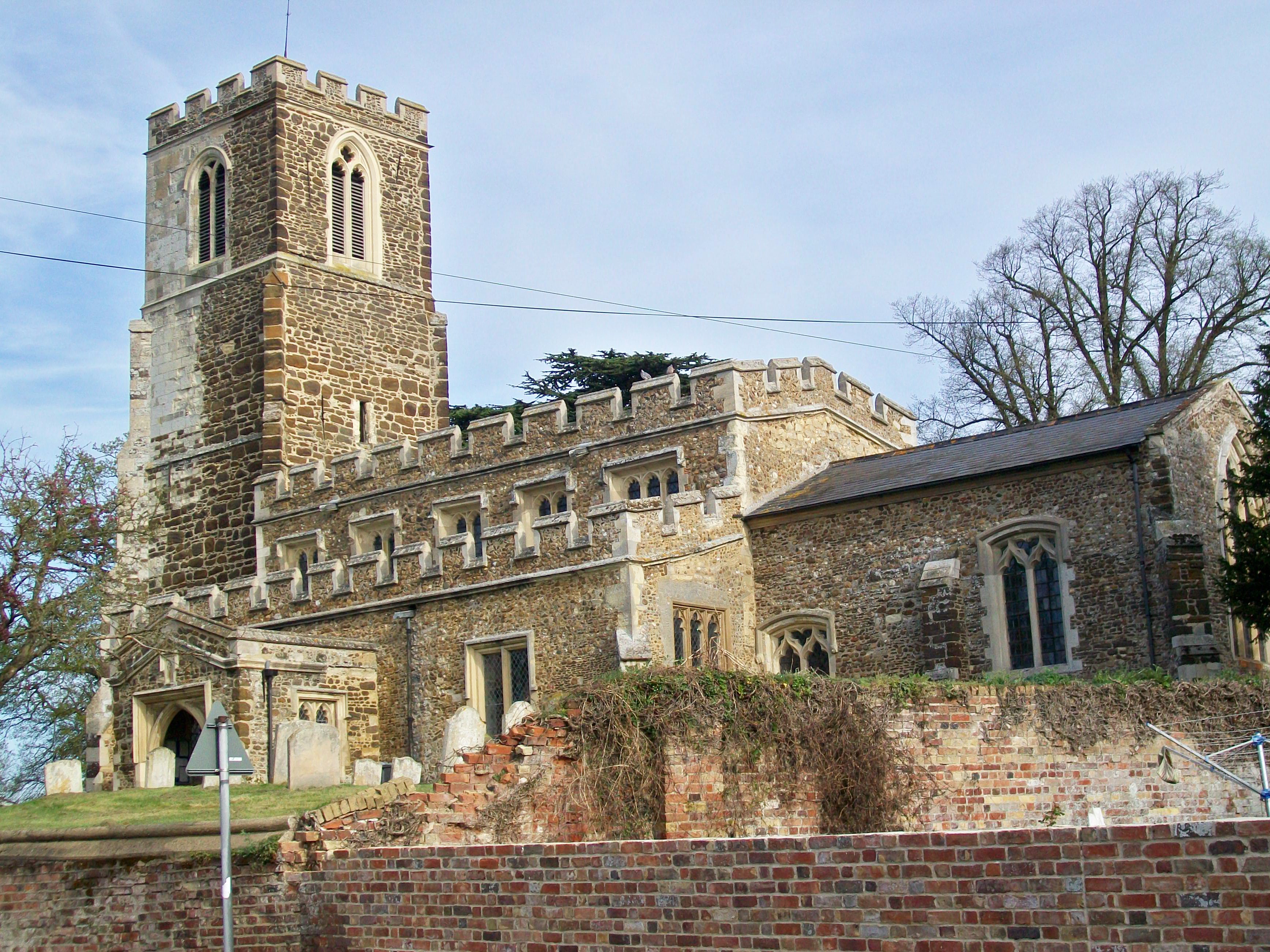
St John the Baptist
Cocayne Hatley, Bedfordshire
The church is set in delightful rural setting and is known for its spectacular Flemish woodwork and peaceful situation.

Our lovely Grade I listed historic and active church is in the heart of a small Bedfordshire village with strong links to the local community and school.
Sutton, Bedfordshire
The church building has many historic features dating back to its origins in the 11th and 12th centuries.Initially under Royal patronage with connections to the the Duchy of Lancaster, the advowson passed to the Burgoyne family for several centuries while they were Lords of the Manor in neighbouring Sutton Park.There are many memorials to the Burgoyne dynasty in the north aisle as well as the flag of HMS Captain which floundered off Cape Finistere in 1870 with the loss of 500 lives including its commander, Hugh Talbot Burgoyne VC. He had previously been one of the first to be awarded the VC for bravery in the Crimea war. There is a splendid Renaissance effigy memorial to John Burgoyne who died in 1604. Sir Roger Burgoyne is commemorated by a wall monument attributed to the pre-eminent wood and stone carver Grinling-Gibbins.
The church is renowned for its Box pews in the north and south aisles. The Burgoyne servants used the ‘Burgoyne suite’ in the north aisle and the lesser folk used those in the south aisle. The last of the Burgoynes, Sir John, died in 1921 and he is buried with his two wives, Amy and Katherine in the north graveyard under the magnificent Cedar of Lebanon tree.
The pulpit was carved by the Rector Oliver Bowles in 1628, with the overlying sounding board, made in 1729, transferred from Everton church to Sutton in 1841.We are fortunate in having the only working Sacred Barrel Organ in Bedfordshire.Built in 1831, it can play 30 hymns and has been used in several services.
The clock on the west tower was made by Charles Butcher in Bedford in 1728 and is due for repair due to a problem with the rewinding mechanism.
There is a stunning stained glass in the east window of the Chancel. It was commissioned by Lieutenant Crommelin in memory of his second wife, Annie, who died in India in 1864.The window depicts six biblical scenes accompanied by quotations from the text. In keeping with pre-reformation design and the emphasis of Holy Communion as the centrepeice of worship, the sedilia and piscina lie in the Chancel as places for clergy to sit and basins to pour away excess blessed wine and water after Communion respectively.
Cocayne Hatley, Bedfordshire
The church is set in delightful rural setting and is known for its spectacular Flemish woodwork and peaceful situation.
Biggleswade, Bedfordshire
St Andrew is built from ironstone with the exception of the west tower which is built from grey ashlar.
Gamlingay, Cambridgeshire
The exterior of St Mary's successfully blends elegant Perpendicular lines with rustic stone, partly fieldstone and partly a type of deep golden green sand known as carstone, which came from a nearby quarry known as The Butts.