
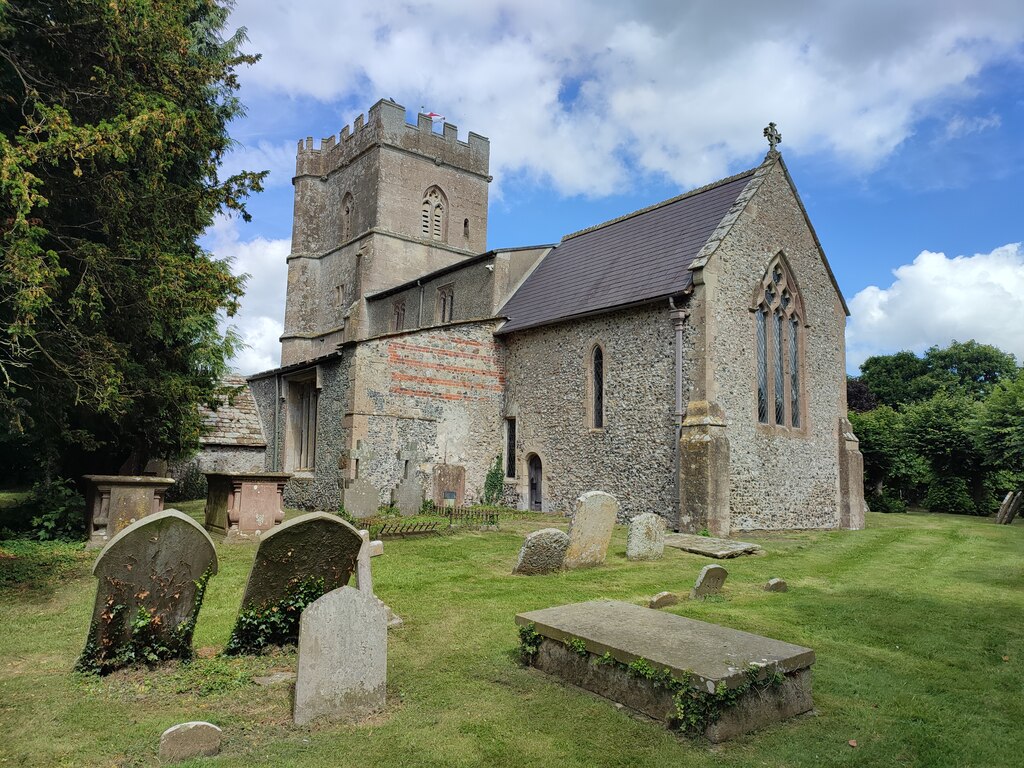
St Mary the Virgin
Marlborough, Wiltshire
Situated at the east end of the High Street, the church is Grade I.

Ours is a small village church dating from the 12th century, with a rich history and a Bronze Age barrow in the churchyard.
Ogbourne Maizey, Wiltshire
Burial mounds from prehistoric days are a familiar part of the scenery, though it is unusual to have one in the churchyard. The mound at Ogbourne St Andrew Church was excavated in 1855 and Saxon remains were found.
There is evidence of human activity on the site from at least 2,500BC; there is an Early Bronze Age barrow at the eastern end of the churchyard. It is probable that there was a Saxon church on the site, but the clearest direct link with the current building starts in Norman times (1130-1150) with the nave arcades.
A new chancel was added in the 13th century, with the tower being added in 1440. A few modifications were made thereafter, but the most significant subsequent restoration occurred in 1847-49 under the hand of the eminent Victorian architect, William Butterfield, who revamped much of the interior.
Over the centuries the church has been variously subject to the jurisdiction of the Abbey of Bec Hellouin in Normandy, then St George’s Chapel Windsor, but currently falls under the Diocese of Salisbury. It has a direct connection with many of the significant events in English history and has served the parish in good times and bad.
Marlborough, Wiltshire
Situated at the east end of the High Street, the church is Grade I.
Mildenhall, Wiltshire
John Betjeman described this as 'the best church in Wilts'.
Aldbourne, Wiltshire
It is thought that a wooden church may have existed in Aldbourne as early as the 7th or 8th century and the Domesday Book (1086) records that the church held two hides of land, sufficient for two plough teams, to provide for the church and priest.