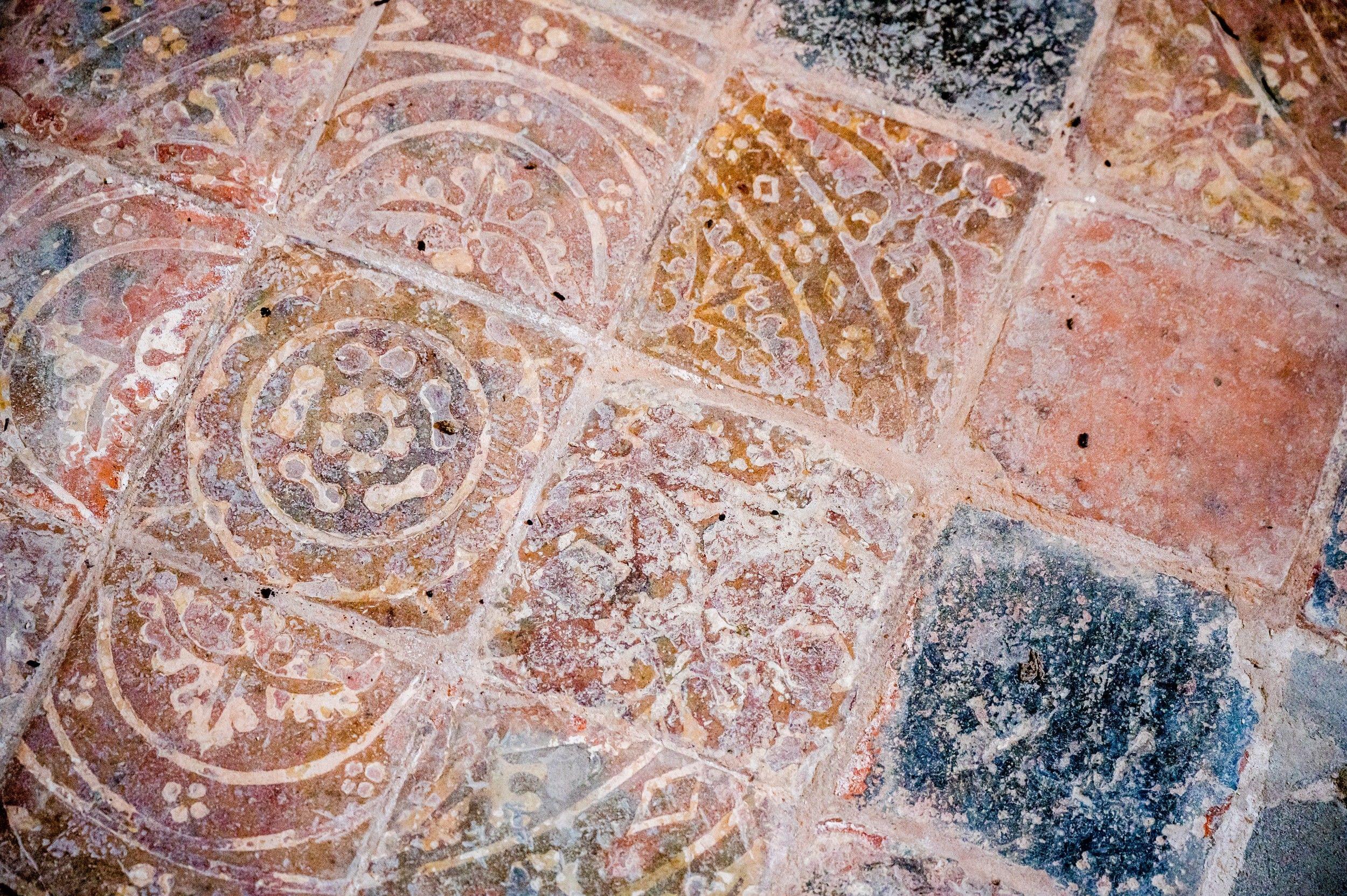
The story of St John’s begins in the 12th century, on the grounds of a Benedictine Priory built long after Christianity reached the East Neuk in the 7th century. Nearby, the cave in Cove Wynd, once a medieval holy well associated with St Mary Magdalen, is now associated with St Fillan, missionary to the Picts. Today pilgrims are welcomed and special services are held there.
After the Jacobite uprisings, the Episcopal Church was driven into the shadows by harsh Penal Laws. In Pittenweem, worshippers gathered secretly in a High Street house until the laws were repealed in 1792. In 1805 Bishop David Low boldly built the church that stands today: a simple oblong space with a gallery and vestry.
Transformation came in 1869. The church was enlarged, the chancel created, and in 1870 three magnificent stained glass windows by the pioneering Ballantyne firm were installed, the first of their kind in this corner of Scotland.
The 20th century brought further artistry. Two reopened north wall windows (1925) depict St Hubert and St John the Baptist. Then Sir Robert Lorimer, one of Scotland’s greatest architects and associated with nearby Kellie Castle, reshaped the Chancel with oak furnishings, carved angels, and a pulpit featuring St John the Evangelist. The church houses a striking painting of Christ holding a baby, possibly by a Polish artist. The side chapel honours Pittenweem’s seafarers, while the Conolly and Anstruther windows enrich the west wall with scenes from the Crucifixion, Resurrection, and empty tomb.
Lottery funding in 2000 provided a much-needed extension, including a vestry and toilet facilities. In 2005 the porch windows, by Artisan of Cellardyke, added a modern flourish, celebrating Pittenweem’s fishing heritage and the musical gifts of designer Dr Ursula Ditchburn.
Outside, Romanesque columns hint at medieval Kilrenny; Bishop James Kennedy’s coat of arms crowns the west elevation; and a stone bishop’s mitre marks the grave of Bishop David Low, who served the congregation for an astonishing 66 years.
Today, St John’s blends ancient stones, Victorian imagination, and modern renewal, standing as a living testament to faith, artistry, and the enduring spirit of Christian pilgrimage.