
There are almost 1,000 churches on Historic England’s Heritage at Risk Register. The designation reflects church buildings that face further decay and could be lost forever without action. Escaping the register might feel impossible, but each year there are a few dozen churches that are removed for positive reasons. St Edmund’s church in Egleton, Rutland, was one such church, which in 2025 was removed after three years on the list. This is how they did it – and how you can plan large repair projects that will help your church, chapel or meeting house be removed too.
Getting started
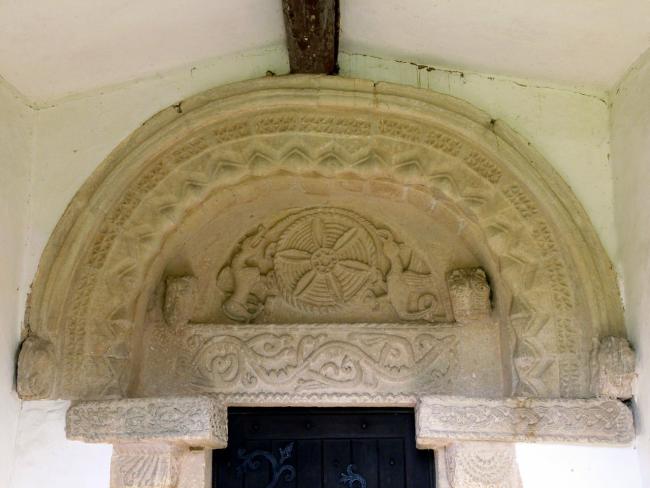
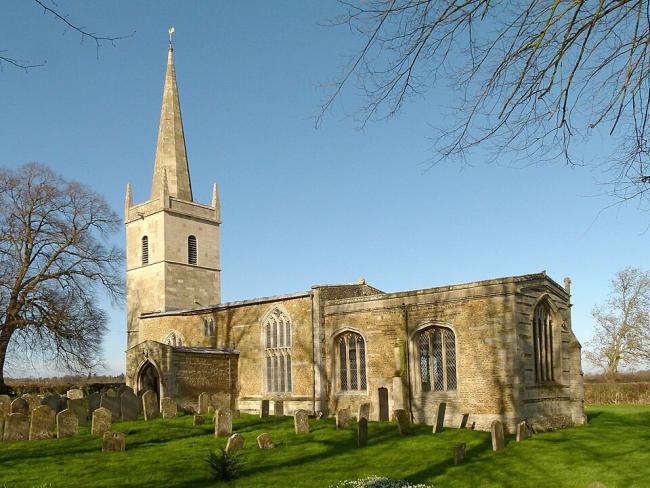
St Edmund’s in Egleton, Rutland, is a spectacular Grade I listed church at the heart of a small community. As a beautiful Norman building located on walking and cycling trails around Rutland Water, it receives more than 2,000 visitors each year.
But problems with the roof and damp inside the church had come up in the church’s regular building survey – their Quinquennial Inspection Report. Their Victorian lead roof had deteriorated, causing timber beams to rot, endangering the building’s structural integrity. Furthermore, problems with the drains were exacerbating the damp issue inside the church. Mould had formed on the Romanesque arch pillars. All of this resulted in the church being added to Historic England’s Heritage at Risk Register in 2022. It was rated as undergoing slow decay, with no solution agreed.
“We knew about the problems, but being added to the Heritage at Risk register was the kickstart we needed,” explains Keith Starling, Treasurer at St Edmund’s.
“The inspections had identified exactly what the major issues were, so we knew how we needed to address them.
“The problem was we really didn’t have any money in the bank. So just getting started was a daunting task.”
Building support for the project
Fundraising naturally became the first priority. Although Egleton is a very small village, with around 90 inhabitants, the local community made a significant contribution to the fundraising and helped to show support for the church.
“I thought it was more important at that stage getting lots of respondents...than the money itself, because we could show that the village was behind the church,” shared Keith.
“We raised about £10,000 from that [first] appeal, which was a really positive start. But a major kickstart came out of the blue.
“A former church warden, who had moved away a few years ago, got in touch after reading our annual newsletter. He explained that there was a gift for the church in his Will. But after hearing about the work that was needed, he offered us the money upfront.”
It was a big moment for the church, as it meant they could appoint a conservation accredited architect and get the project going.
While it was clear that a lot more funding would be needed, the team now had a whole community of supporters. This immediately gave the project a sense of momentum that would help it to keep moving forward.
Careful project management
The initial funding was a major step that got the ball rolling, but there was still work to do. Applying for permission to carry out the repairs, seeking grant funding and addressing the drain problem all kept the team at the church busy. Behind all of this activity was a huge amount of planning that ensured that the project ran smoothly.
“Getting the timing right was a big challenge. You have to line up the funding. Some funders only give grants once a year, so you need to be organised when applying for them,” says Keith.
“What’s more, many of them pay out after work is complete, so it’s a delicate operation making sure that you have the cashflow to pay for things.
“It was really stressful at times. I was really questioning how we were going to complete the repairs, as we just didn’t have any spare money.”
Careful project management, underpinned by rigorous preparation, helped to keep everything on track. By being organised with the project planning and working with the architect to keep on top of things, Keith and the team at St Edmund’s ensured that the repairs went smoothly.
Dealing with unexpected obstacles
Even with the best planning, during any repairs there will be some unexpected challenges. For St Edmunds, one of the biggest was dealing with the presence of bats.
For years, bats had been entering the roof of the church through cracks in the structure.
“They had caused damage throughout the building and were getting stuck in some places,” explains Keith.
“But dealing with them is a sensitive operation. We involved experts from Bats in Churches. It did create an extra cost for us, but Bats in Churches were able to help us with that.
"We managed to get the cracks repaired so that the bats couldn’t get into areas where they’d get stuck.
“All of this was before the major repairs, so it didn’t halt anything. But it did have a big effect. The bats still come and roost in the church from spring to autumn each year. So, we can’t work on certain parts of the building during that time.
“When you factor in weather over the winter months, it added another layer of complexity to what we were doing.”
Responding to unexpected obstacles is an important part of the process. Maintaining a positive approach and keeping sight of the overall objective can help you to overcome challenges and keep on track.
Identifying the right grants for the project
Getting a church removed from the Heritage at Risk Register will likely involve major repairs. Although initial fundraising efforts are important to build momentum and get a project off the ground, you are likely to need grant funding to get the repairs completed.
At St Edmund’s, the initial fundraising enabled the church to appoint an architect, and from there the project came together. But Keith spent a huge amount of time applying for grants, ensuring that he maximised the chance of success in each one.
“I made sure to do my research first,” he explains.
“That meant checking that we fit the criteria and identifying the size of grant that we could be offered. We found a few local grants which ended up being really significant for us. The Rutland Historic Churches Trust helped us with funding and also with finding other funders.
“It can be difficult to know what size of grant to request. Our approach was just to be honest about our needs. Every application is different. So, you can’t just copy and paste what you’ve written. Once you have the information prepared for one grant application, you will be able to use it elsewhere. But you also need to look at the criteria and think about what the funder wants to see. But they want to help ‘at risk’ churches, so if you put the effort into the applications, it often pays off.”
This approach helped St Edmund’s obtain the funding they needed. Two organisations even produced more funding than the church had requested, including the National Churches Trust, which awarded and recommended the church for funding that totalled £22,930.
Although the process can be highly competitive, it is always worth spending the time getting the application right, as you never know where it might lead. Make sure to look up your local Churches Trust, as many of them offer grants or can provide you with additional support.
Celebrate every stage
When a church goes onto the Heritage at Risk Register, it can feel like there’s a mountain to climb. Getting it to a stable – let alone good – condition can seem overwhelming. But by celebrating success at each stage of work, you’ll help build momentum, support your fundraising efforts and boost your congregation and volunteer’s morale, as Keith explains:
“The biggest thing I learned was how success in one element of a project really helps you forward onto the next one. For one thing, you develop that relationship with the architect and can work together to identify the next phase.
“Also, grant funders want to see you making an effort. They want to support projects that are going well. So, celebrating those milestones publicly can show them the progress you’re making. It’s not just grant funders either. We had a number of donations from strangers who had read about the church repairs.
“Having this official status of being ‘at risk’ definitely helped us to demonstrate how serious the problem was, but also how much we had achieved trying to overcome it.”
Completing a major repair project is a challenge that can drain your energy. But by harnessing the momentum you do have and sharing it with others, you will make other aspects, like fundraising, much easier.
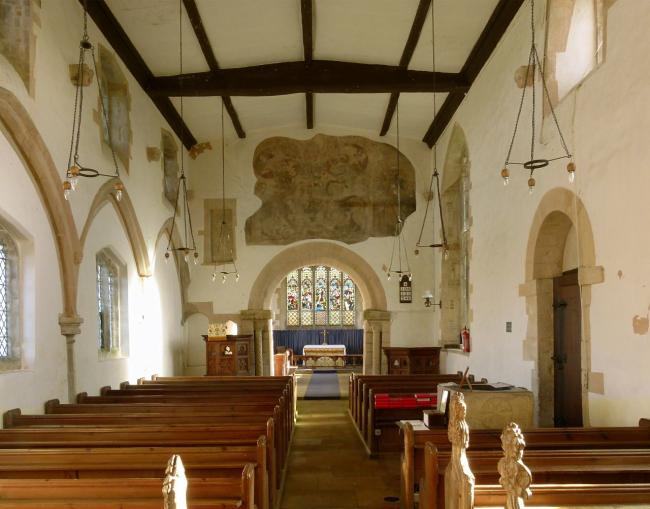
After years of hard work, in 2025 Egleton St Edmund’s was removed from the Heritage at Risk Register. The historic features are now in excellent condition, and thousands of visitors have noticed the difference.
Reflecting on the experience, Keith shares his satisfaction: “it’s very reassuring now to know that there aren’t likely to be any major problems with the building for the next 50 years or more.”
Through a great deal of hard work and sensible planning, the church has been brought back to its former glory for the future generation to enjoy. If your church is on the Heritage at Risk Register or in a state of disrepair, do not give up. Be inspired by the team at St Edmund’s and read through our advice below.
For churches: top tips for your place of worship
- Engage with your local community to get your project off the ground and build momentum. Getting the community onboard can make a big difference for your repair project; it can bring in donations, new volunteers and help you to leverage this support to get funds from elsewhere.
- Create a project plan. Careful management will keep things on track – especially when you’re carrying out major repairs or multi-phase projects. Do your research and work out what needs to happen when. Create a team to help make sure the responsibility does not rest on one person. If you’re presented with unexpected challenges, your planning will help to mitigate the effects.
- Do your research when applying for grant funding. Funders want to help you, but competition is often fierce. It’s always worth doing your research about grants you’re applying for. Read the guidance and make sure you tailor your application to show why your project is worth their investment and suits their priorities. Make sure you talk about your church and your community and the difference the project will make. Find funders for your church project here.
- Use your architect's expertise. Make sure to appoint a conservation accredited architect. As well as providing expertise on sensitive solutions, they will be experienced in leading projects and approaching funders.
- Use momentum to your advantage. Once you’ve got support and some funding in place, you can use that success to help keep things going. Charities and individuals like funding positive projects that are on track to be completed. So, show what you’ve done and take pride in the progress you do make. If you are in receipt of a National Churches Trust grant tag us into your social media posts so we can help celebrate your successes more widely.