
St Deiniol
Penarlâg, Flintshire
Mae eglwys wedi’i chysegru i Sant Deiniol wedi sefyll ar y safle hwn ers y chweched ganrif. Mae’r gynulleidfa’n ymfalchïo yn y cysylltiad rhwng yr eglwys a theulu y Prif Weinidog Fictoraidd, William Ewart Gladstone.

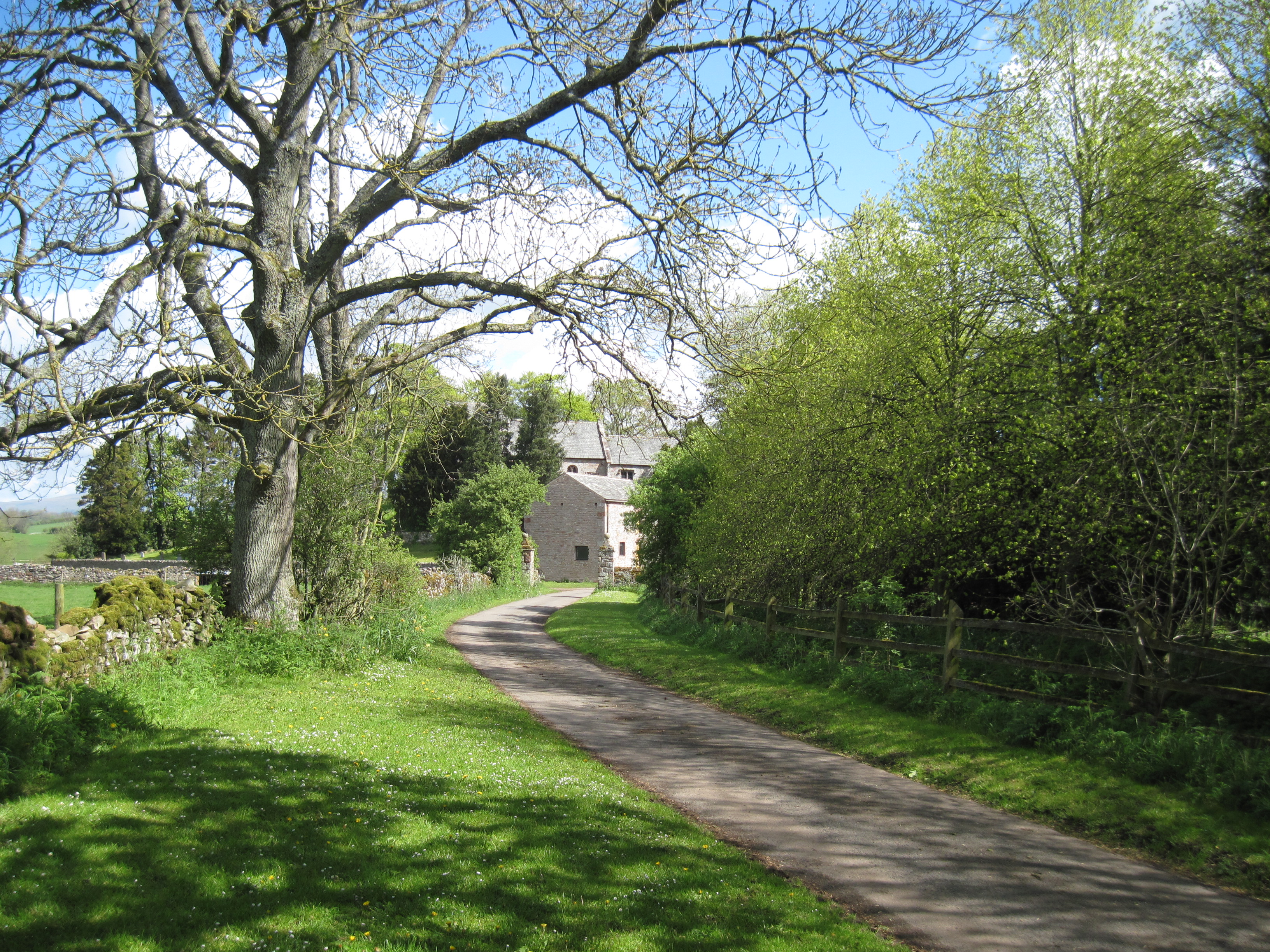
An extremely old and interesting church in rural Cumbria, built on a man-made mound, dating back to pre Christian times. St James's defensive position overlooks the river Eden and the cluster of buildings that make up Ormside Hall.
Great Ormside, Cumbria
This small robust church displays many features of historical and architectural interest from the Roman, Saxon and Viking periods, spanning 10 centuries.
Ormside means ‘the seat of Orm (a Viking)’. The Ormside Bowl, dating from the 7th or 8th century, was unearthed in the churchyard in 1823 and is now on display in the Yorkshire Museum in York. It is regarded as one of the country's most valuable and rare Anglo-Saxon artefacts. In 1898 a Viking burial of a warrior with his sword (which is now in Tullie House museum in Carlisle) was discovered in the churchyard. In the past Ormside was a much more important place than it now appears, it is believed that the design of the Norman church at Ormside was the work of Bishop Osmande (later bishop of Salisbury, died 1099) one of the compilers of the Domesday Book and William the Conqueror’s nephew.
Many ancient carved stones which stood near the church, some bearing Latin inscriptions, were ruthlessly broken into pieces. The mutilated Roman altar stone was walled into the present porch. Others can be found around the church, some of the inscriptions might refer to St Osmund. He was nephew of William the Conqueror and was made Chancellor of the realm around 1070 and chief commissioner for drawing up the Doomsday Book. It is said that he designed and help build St James. He became Bishop of Old Sarum, now Salisbury Cathedral.
In the Hilton chapel are photos of the medieval bells in the tower and the silver-gilt Ormside bowl. The latter is perhaps the finest piece of Anglo-Saxon metalwork surviving, probably looted by the Vikings from a Northumbrian abbey and unearthed in Ormside graveyard in 1823. It’s now displayed in its own showcase in the Yorkshire Museum. A Viking burial yielded a sword and shield boss. Also in the chapel is a replica of the will of the Black Prince written in 1376 by John de Grote, formerly priest at Ormside. The Coat of Arms is that of the Hilton family, who built the chapel in 1723 on the site of a north aisle.
The defensive 13th-century tower has no exterior door and small lancet windows. It and the pele tower part of Ormside Hall would have guarded the way to the ford below from Scottish raiders. The church and Hall feature in Sir Nikolaus Pevsner’s book The Buildings of England. Before the addition of the vestry, a lamp guided travellers, shining from a niche outside the north west wall, near the 14th century. There is a Leper’s Squint through to the chancel. The splendid king post chancel roof, with raking queen posts, dates from the last extension in the late 15th century.
The windows are contemporary, apart from older, ogee-headed ones re-sited above the priest’s door. In front of the 1703 Communion rails are colourful kneelers and matching pew cushions brought out for services, all sewn by members of the congregation. They depict patterns on ancient tombstones (now incorporated into the building), interspersed with wild flowers found at Ormside and pictures of the Cross Tree. This sycamore dates from 1693 and stands nearby, within steps up to the site of a market or preaching cross.
Penarlâg, Flintshire
Mae eglwys wedi’i chysegru i Sant Deiniol wedi sefyll ar y safle hwn ers y chweched ganrif. Mae’r gynulleidfa’n ymfalchïo yn y cysylltiad rhwng yr eglwys a theulu y Prif Weinidog Fictoraidd, William Ewart Gladstone.
Llandrillo yn Rhos, Clwyd
Mae’r adeilad syml, to carreg, bach iawn hwn, yn wyth troedfedd o uchder ac un droedfedd ar ddeg o hyd; mae ei waliau o drwch dwy droedfedd ac o dan ei allor, mae ffynnon sanctaidd St Trillo.
Yr Orsedd, Clwyd
Adeiladwyd yr eglwys gyntaf ar y safle hwn yn 1841, ond fe’i difrodwyd yn ddifrifol gan dân. Yn ôl yr hanes, ym mis Mai 1891, cynhaliodd y Ficer ‘briodas yn yr adfeilion’.